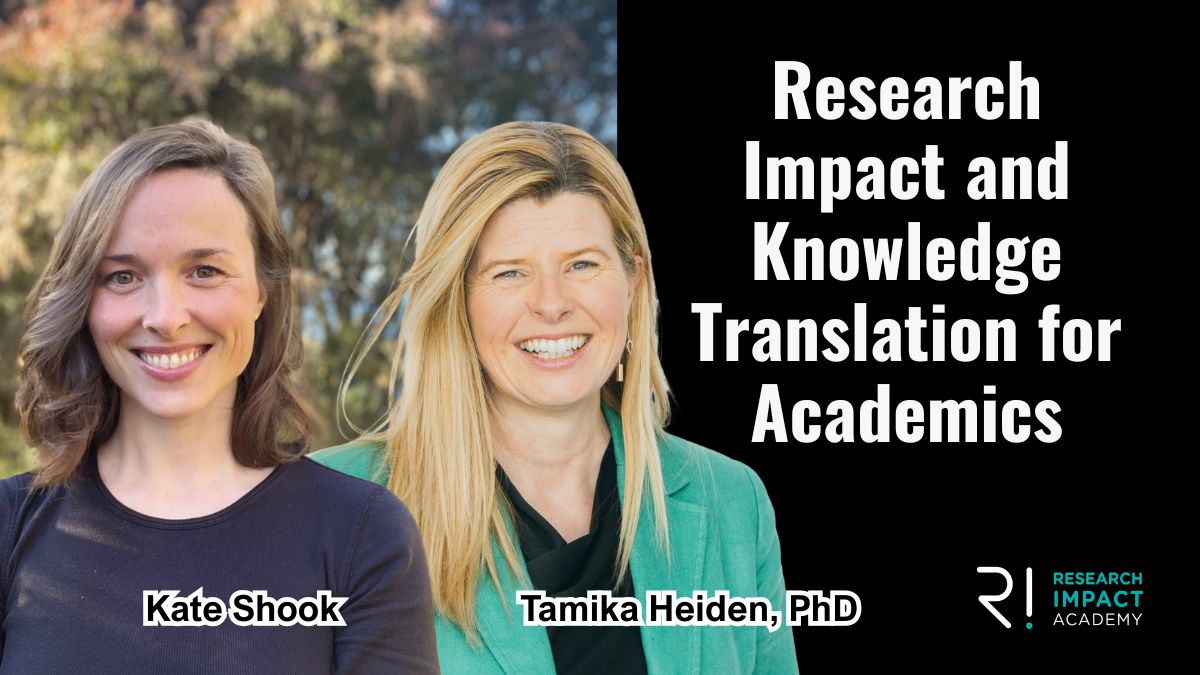
What is knowledge translation? How can we be intentional about research impact and engagement? Tamika Heiden, PhD and Kate Shook from the Research Impact Academy in Australia join Jennifer van Alstyne. This conversation is about how good visibility can help you tell your research story.
Tamika Heiden, PhD and Kate Shook from the Research Impact Academy in Australia join Jennifer van Alstyne on The Social Academic podcast. This conversation is about how visibility can help you tell your research story.
This episode was broadcast live on March 17, 2026. A full transcript will be added to this blog post for you when a full review by a human has been completed. Thank you!
Subscribe to The Social Academic blog.
The form above subscribes you to new posts published on The Social Academic blog.
Want emails from Jennifer on building your online presence? Subscribe to her email list.
Looking for the podcast? Subscribe on Spotify.
Prefer to watch videos? Subscribe on YouTube.
Interview
Introduction to research impact and engagement
Jennifer van Alstyne: This is The Social Academic Podcast, and I’m here with folks from the Research Impact Academy in Australia. Research impact, research engagement, telling our story. I think that this is something that sometimes people wait until it needs to have outputs and really understanding that this is something that we can be more intentional about. I’m so excited for this conversation today. Kate Shook, Tamika Heiden, would you please introduce yourselves and the Research Impact Academy for us?
Tamika Heiden, PhD: Sure. I’ll start. I am the director of the Research Impact Academy. It’s a consultancy based in Australia. We started 12 years ago now. And in a prior life, I was an academic researcher for around a decade or so. My passion for impact came from that role. And yeah, so started the academy 12 years ago and now work globally. Although we’re based in Australia, working a lot with Europe and other countries in Asia. I have a partnership with an organization in Canada. Yeah, really far-ranging clients, but also the type of work is really broad as well. Impact is so many things, as I’m sure this discussion is really going to show. And I’ll let Kate introduce herself.
Kate Shook: Hi everyone, I’m Kate Shook and I’m the Research Impact Officer at the Research Impact Academy, working with Tamika on all of those exciting projects and things that is happening at the moment. My background’s in education and policy. I just have a love of research and wanted to help people get that out there and make a difference.
What is knowledge translation?
Jennifer: That brings us to my first question, which is what is knowledge translation and how can that look different for different people?
Tamika: Well, I’m happy to start if you like, Kate. I don’t want to throw it on your toes. But look, it’s different things for different people, but if I had to sum it up, the simplest way I’ve heard this explained is that knowledge translation is about getting the right information to the right people at the right time and in a format that’s useful to somebody. It’s about making sure that the information we’re sharing from research is going to be applicable, of interest and in the right format for someone to basically use it, to understand it, to be influenced by it. And it’s really about how do we get all of this knowledge that we generate in universities and other sectors out there. And it’s public money that gets spent on these things. So how do we give back to the broader public? But it also includes things like really considering people’s preferences for information.
You might be a really visual person or you might be more of a word person. Translation is sort of getting it out there, but also the deeper understanding of what that looks like in the best way for different people. And I’ll let Kate add her two cents in here as well.
Kate: Well, I just wanted to say that knowledge translation is one of those things that has so many definitions and we could spend a whole session talking about all the different ways that people understand it and talk about it. But I think I like to think about it as something where you’re starting with the end in mind. It encompasses all of those things leading up to sharing the information. How are you going to go about it? Like Tamika said, right information to the right people at the right time. And it can look different for different types of researchers. Obviously impacts from basic science will take different forms than other science fields. It’s all vital. We all need to think about it in different ways and people need to kind of be flexible in their approach.
How to build intentionality into your research plan
Jennifer: I feel like there’s probably some folks who are listening to this call that are like, “Hmm, I really want to be more intentional about how I do knowledge translation, how I fit this into not just my thinking about my research, but my sharing about it, and maybe my intentionality for future research,” it sounds. How can we start to be more intentional about knowledge translation?
Tamika: Hm, that’s a great question.
Kate: I think intentional equals planning, that’s what comes straight into mind, planning. And that’s what we’re talking about.
Tamika: Exactly, Kate. Yeah. Yeah.
And I agree 100%. I think people don’t think about it till it’s too late. You said it in your introduction, Jennifer, you get the output and suddenly you’re like, “What should we do with this thing?” Magic happens, so I think that’s one of the biggest things that we don’t see is we don’t see people being intentional about it and therefore it can be a real afterthought. There are some initiatives around the world that are helping to make people be more mindful of it at the beginning of projects. We’re seeing funders basically say,” How are you going to share this? “Or knowledge translation plans are in some funders, but I still think sometimes we almost do a bit of lip service to that as well where we kind of write what we think people want to hear rather than maybe actually doing it. I think people need to ask themselves, “Why am I doing this work?
Why am I even showing up today? Why this topic? Why should I bother with this?” And in doing that, I think really work out who’s the audience for that? Who’s going to be interested? Who cares?
And in doing that, start to realize, “Okay, so I am going to have this new knowledge, but who do I want to influence? What decisions do I want to change? What difference do I want to make in the world?” And then involving those people. I mean, I think that’s a really big one for me. And I’ll divert back to Kate for her thoughts further than planning.
Kate: Oh, look, I think to be intentional also takes a certain amount of passion and perseverance. It’s moving through the things that Tamika spoke about, but it’s being flexible also and just having that end goal in mind and really moving with what happens. You might have to switch track. Impact isn’t linear. We always say that, you might move back and forth. Yeah, perseverance is another big thing that I think is important.
Why research visibility matters for credibility
Tamika: Yeah, and that kind of, when we talk about intentional, I think also one of the things is making everything we do more visible. One of the things that I see quite a lot is now there’s millions of journal articles published a year, right? And we know that in some discipline areas of research, that some journal articles are never read by more than three people. Now, I always have a joke about this one and I say, “Well, that’s like mom, dad, and maybe a supervisor.” And most people will say to me, “Mom and dad will never read my papers, so that’s not the three.” But it also just suggests that if we’re not making things visible and we’re not getting people to read our information, and they’re not going to pick up a journal article necessarily, like somebody who is a patient isn’t going to read a journal article because half of it they won’t even understand, but how do we give them information in a way that’s going to be more meaningful for them, more interesting to them?
Maybe they want video versus writing and that sort of stuff. But that’s the big one. And I’m often seeing now people aren’t even sharing on social media or, and so we’re trying to find out who’s been accessing people’s work and it’s like, “Where did you share it?” And they’ll go, “Well, I published in a journal,” and it’s, that’s not enough. I think really focusing on who and why is a really big one.
Jennifer: I love all the questions you’ve shared already to help folks consider what is it about my research that is making me continue to do this work? I think that some people consider that question too self-serving. They almost think it’s about me, but it’s really not. It’s about the why. It’s about all of the people that this research supports. It’s about the people that it touches, their families, the people who are doing and enacting the policies. It can reach so many people, but if we think that there’s only potential for those three readers, it makes that asking of the question of why more difficult. What would you say to someone who is really feeling like, “Oh, I could create space to ask myself those questions. I think that would be valuable, but I also think that’s kind of about me, me, me.”
Kate: I think normalizing that is part of it, having discussions with others and making it normal to say those questions without it being about you. Like, these is things we need to ask as researchers. Let’s come together and not be shy and make it normal.
Tamika: Yeah. I also think that asking those questions and kind of thinking through those elements, for some researchers who may be listening to this, they’re probably thinking, “But Tamika, I work in the lab and I’m doing really fundamental discovery stuff and what you’re saying doesn’t count.” I think it does maybe in different ways. And so I think we have to remember, and when I started in this space, I will just say, I used to think, “Oh, well, knowledge translation’s just for people doing applied work.” Well, actually it’s not because we see now a lot more emphasis on consumer involvement, engagement. We see that money still being spent in this area and governments and other funders, they want to know the value of the spend of their money. In order to answer the value, we have to be able to say, “This is who it’s valuable to, and I’ve heard their voices, I’ve listened to them, I’ve had those discussions, and not only have I heard their voices, but I’ve also thought about how I’m going to share the findings once I have those.” So having input, having great ways of sharing it.
3 types of researchers and their motivations
Tamika: And I think asking those questions is not about the researcher themselves, because most people that I work with, they didn’t get into research to just do this for themselves. And the really interesting thing about this is we always talk about three categories of researchers. I don’t know if you want to hear my three categories, Jennifer.
Jennifer: Please share.
Tamika: Okay. It’s always funny when you ask this in a workshop and you say to people, “Okay, who in the room got into research because you want to change the world?” And you’ll get people who put their hand up and I’m like, “I’m one of them. I wanted to make a difference. I wanted to change the world.” And then you have the people who got into it because they’re just really curious and they want to get into the lab and look for things. And those are the people who tend to say, “Go away and leave me alone because I just want to do research and that’s why I’m here.” And it’s okay, but it doesn’t really get funding anymore. And then you have the third group, which I like to call my Sheldon Coopers. These are the people who want to win awards, who want to be known for something, and there’s nothing wrong with that, but they’re the really easy ones to work with.
Those people and the people who want to change the world, they’re my people because they’re the ones who, when we talk about impact, we’re like, “Well, that’s how you show that. That’s how you win the awards.” Do you want to add anything, Kate?
Kate: Oh, I’m just thinking what strategies do we use for the people hiding in the corner, not wanting to engage? I think it’s a personality thing too sometimes. People are open to sharing. People can be passionate about research, but not passionate about shouting it from a mountaintop, what difference they’ve made. It does come down to your way of being in the world as well, I think. And we often will talk about how we can support different types of researchers and different personalities in the ways of sharing their work that they feel comfortable with.
Jennifer: I really like that. I feel like I get a lot of the people who are on the introverted side, maybe they have won awards or gotten media coverage, but it wasn’t really by intention. Maybe they kind of would avoid it in real life if they had the opportunity to. And those people are still thoughtful, intentional, and creative about the ways that they choose to be visible online. Yeah, maybe they’re not posting on social media, but they’re open to investing in a video that’s actually going to reach a bunch of people. I think that there’s so many ways that we can stop limiting ourselves from what visibility looks like. And I love that the Research Impact Academy can help folks really consider and ask themselves these questions. Maybe you’re not going to create space for that on your own, but if you work with someone and get support, there’s other ways to reach the same result.
What is the first step toward better research visibility?
Tamika: Yeah. There’s definitely a first step that people have to take. I think if someone was watching this kind of going, “Okay, well, what’s the first thing I should do?” I mean, there’s lots of things you can do. Just think of the word visibility and that sort of helps you. But the one thing I would say that people need to do is think about the first step away from their research. What is it about your findings that will help you get it into the hands of whoever is next? We have this saying around our next user. And we like to sort of use the analogy around baton passing and who are you passing the baton to? Or I think I’m probably pronouncing that incorrectly for the American audience when I have to say baton. Who are you passing the baton to? I know this because I have done this with audiences before all around the world, but who am I passing that to?
And I’m talking about the relay race. Who’s going to take it and who’s going to run with it? And if you can just think about that one next pass, that starts to get you there. And so that’s the thing. How do you even get somebody to want you to take that one next pass in terms of visibility?
How has the landscape of research impact evolved?
Jennifer: Tamika, you mentioned earlier that research funders aren’t as interested in funding folks that aren’t getting that visibility with intention early on in their project. It sounds like it’s become more common that’s part of the grant application process, for instance. I’m curious what other shifts you’ve seen and how research impact or engagement has changed over the years?
Tamika: Yeah, it’s a really interesting one. When I started in this space, I remember my first foray into this really being that the Canadian Institutes of Health Research at that time had introduced knowledge translation. They were kind of one of the first to really make it obvious. And so a lot of research was done on that. But now globally, across a lot of other funders, and look, Australia was and still is a little bit behind. New Zealand was even ahead of us, but we’re seeing the funders ask for not only that consumer involvement, so understanding that at the beginning, but a lot more around a pathway to impact. Sometimes it’s really explicit, what’s the pathway to impact? Other times it’s, tell us about how you’re going, the outcomes you’re going to have. And to do that, you have to write about a pathway, even though they might not have asked you specifically about a pathway.
It’s really important to read between the lines of a lot of these funders. The pathways is one. We’re seeing track record really pick up on impact. We’ve got narrative CVs in Europe and UK, which are asking about a lot more information for somebody’s track record in their career than say just a normal CV would, and also more than just your publications. Previously it was how many publications do you have? And everyone would just give a big list of all their peer reviewed publications. But now we’re seeing, give us only your top 10 and tell us why you chose these 10. And we’re also seeing, so writing a narrative that goes with those, but also they’re much more interested in, how have you been a leader in your field? How have you contributed to your field more broadly? And so that’s really shining through in some funders ways of assessing the credibility of a researcher in terms of what they’re proposing to do.
As well as having great science, you now have to be, let’s just say, a great translator or a great academic, but an academic that does other stuff. And so I do feel for academics in that way, because to be honest, it’s a lot to pile on. It’s a lot to track. And you feel like, “I’ve got my day job and then I’ve got to do all this other stuff just to meet those criteria.” And I think like Kate said before though, I think we need to normalize some of this stuff. How do we make it normal to have this all encompassing kind of track record rather than, “I’ve got this and this.” They’re the big ones that we see is really those questions around how are you planning for this, so that pathway, but also the track records have changed a lot.
Jennifer: That’s really interesting. I’m so appreciative that you shared that because honestly, I’m someone who advocates for sharing more of the academic life than just publications on say personal academic websites, even research lab websites. When you can get more of a sense of the culture and the feel of what it’s like to work with folks, I think that makes a big difference for people and hearing that is something people are bringing into their CVs, that is newer. That’s very interesting. I really appreciate you sharing that.
Finding clarity in your research story
Jennifer: I’m curious about what it looks like on the other end. When people have put in that intention into understanding their impact and being able to create outputs that share it, what does it feel like when, say, all of a sudden they have this case study where they can better understand their own research story?
Kate: I think there’s a big sense of relief. People realizing they do have impact and they now can kind of see how to articulate it. I mean, that’s the people that we work with when drafting case studies. Many people come to us not knowing what impact is, what to write about, how to write about it, and also where even start trying to find their impact. There’s a whole kind of educational process behind that we help out with, but also it’s the emotional side to it too with the impact case study. You’re talking about years of work or even a life’s work being whittled down into a few pages. I think that’s something that we try to do is really understand that emotional side to what it looks like when it finally is on the page and we’ve written about it.
Sorry, you go.
Jennifer: I was curious, who do those case studies get shared with? Who are the audience or hopeful audiences for those?
Kate: Oh, it’s all different for different cases. They may use them internally or they may put them out into the world. There’s different use cases for the case studies that we write. We’re doing one at the moment where they use it in their kind of year report. They have a selection of case studies that shows the work that they’ve done.
Jennifer: I was like, “I wonder if I could put case studies on websites?” That would be so amazing to have not only it live in this document that’s super shareable, but have a permanent home on someone’s web space. That was my dream.
Tamika: Oh, well there is, I mean, that’s what people are doing with them. They are putting them on websites and there’s a lot of examples of that. There’s a national assessment done in the UK where they collect case studies. I think it’s every six or seven years and they now have, I think it’s 3000 case studies from . . . no, 7,000 case studies, sorry, from 2014 and another 7,000 odd case studies from 2021. They’re all publicly available. They’re not all great. But the other thing is that sometimes with case studies, what we see that can be a little bit frustrating is that they get caught up with PR teams who write them from the perspective of, “This is a marketing piece of material.” Sometimes when we do that, things become quite a bit of fluff. I think rather than having the detail of what’s really happened, and that’s when I think academics kind of start to go, “Oh, it’s just a fluff piece. It’s not really a credible piece.” I think there is a real difference between what we see as a case study versus what perhaps someone in your PR or media team might want to pull together as a case study.
Jennifer: That’s really interesting.
Kate: Often the detectives always digging for details. People could feel a little bit exposed by the amount of questions that we have a lot of the time, always digging deeper, always looking for the numbers. How can we support this and how can we make it much more credible? Yeah, that’s a challenge for us to not make people feel like we’re asking too many questions.
Tamika: Oh, making people feel exposed Kate. Don’t tell them.
Jennifer: Honestly, I think it’s nice to be open about because if we come into that process being like, “Okay, I’m going to have to answer some questions.” It’s a much better space to be in that answer, kind of response period. I really am curious, if there was one thing that you could have people track that would help them when they’re in that meeting, is there a number or anything that’s trackable that they could start with now?
Kate: Can I just say, before we focus in on something to track, I think it’s more of an approach. It’s an approach to be endlessly curious, right? We operate on curiosity. We have to be to enable the work that we do and we try to encourage that in people to be curious. Where did this come from or how would I show this? And when they start to feel those ‘aha’ moments of finding it or seeing how it comes together, they will feel satisfied. It’s a rewarding process, isn’t it? I feel like it’s a rewarding process.
Tamika: Yeah. Yeah, agree. I love that answer. And you’re absolutely spot on and it gave me a second to think about what I was going to say because there’s no one thing.
Kate: That’s the strategy.
Tamika: There we go.
What questions should you ask to track your research impact?
Tamika: There was no one thing. But what I will say is when I am training people and one of the things that I’ve said to a lot of people is impact is two questions. It’s quite simple. Maybe I’m oversimplifying it. The first question helps you to know the one thing I would track. That is people say to me, “Tamika, I’ve got to show my impact. I’ve got to write about impact. I don’t know what to write. I don’t know what my impact is. ” The one thing I say to people is, “Who used your work?” That’s the first question. So if that’s the one thing that you know, that you track, who’s using your work and then what did they do with it and what happened? That’s it. Who used your work and so what? If there’s one thing to track, it goes back to Kate’s thing. Be curious about who’s using your work. Be curious about the people you’re influencing. What are they doing with it? Who are those people? And after that, it gets a bit trickier, but that’s the number one thing because if we know that, we can start to work out where to become that detective.
Kate: And I think also what can come up for people is a sense of surprise. If you start asking those questions, we’ve found some pretty awesome things in our detective work for people. For example, there was a lady who does work in insurance risk and her work was referred to in the Australian Parliament. A minister used her findings to back up a point that they were making about a policy change and she had no idea. These are the things that you can start finding if you get curious and how awesome is that? Not that many people can say that kind of thing.
Tamika: Exactly. And the client who didn’t realize that her work had been used in the Apple Watch patent.
How to align your research with long-term career goals
Jennifer: Very cool. And I’m curious about something that you said when we first met. You said that good visibility really helps researchers with impact, engagement and credibility. That’s something that comes up in your trainings with researchers often. I’m curious about the long-term benefits you hope for. If people embrace this as part of not just the question that they’re responding to because they need to on a grant, but as part of their research life, what are the benefits you hope for for their careers long term?
Tamika: I don’t know if you want me to go first, Kate. I’m happy to go.
Kate: I’d just like to say that what an opportunity. Let’s not be scared of it. Let’s think of it as for the people that are starting out. What an opportunity to plan for that and think about how are you going to present yourself and your work? How do you want that to make a difference? It’s just, that excites me. I don’t want to feel overwhelmed and I don’t want others to feel overwhelmed by that.
Tamika: Yeah. I think that we, as I said before, we’re seeing this show up. In terms of people’s careers and the long-term benefit, this is not going anywhere. In fact, we see year on year impact is coming up more and more. Money available to research is going down. People’s belief in science is even going down, which can be really horrible and unfortunate. So the thing that we can do is to say, look at the benefit from the spend that goes into doing this. To do that, it is about showing impact. It’s about engaging with the right people. It’s about being credible in what we’re doing. I think though, in terms of more for the academic themselves, it’s what do you want to see at the end of your career? What do you want to be telling your children, your grandchildren, whatever, about the things that you did that made a difference?
Do you want to sit there and say, “I was an academic at this university for years and it’s a prestigious university, so yay me. ” Or do you want to be saying, “You know that thing that you use every day? Well, my research, it helped to develop that. It led to that. It was part of that.” It’s almost you get to a point of what are people going to say about you when you’re gone kind of scenario, which sounds horrible, but that’s really what the mark we want to leave on the world is. And the thing that I would say that helps with that is being super, super clear. “What is my vision for my research life or for my career? What is it that I am in this for?” And that’ll help us go there. What’s the bright, shiny light at the end that you really want to achieve that will make you feel really good?
And working towards that and remembering that along the way, yes, there’s going to be all these other things that you have to do, but all those other things that you’re being asked for right now, they actually help you achieve that.
Jennifer: I’ve loved this note of legacy with intention. I feel like that’s such a value of mine. I really appreciate that even though sometimes legacy is not always seen as a super positive topic, it’s something that is quite beautiful and that we can have agency in. Tamika, Kate, I’m so happy for this conversation. How can people get in touch with and connect with the Research Impact Academy after this?
Tamika: Yeah, you can find us on all of the social channels. We’re on X, we’re on Bluesky, we’re on LinkedIn. We’re everywhere because we have to be. I think we’re even on Instagram, but we’re there, we’re Facebook. You can just type Research Impact Academy into your search bar and you will find us. We’re pretty transparent so you can get in touch that way.
Jennifer: Amazing. Is there anything you’d like to add before we wrap up? This has been such a good chat.
Tamika: Look, not from my side. I think really just thank you to you, Jennifer, and thank you to the audience who are listening. Even if you got one thing out of this from listening, please go share it with other colleagues because my passion, we talked about passion. My passion is helping academics to make a difference. By sharing anything you can about what you might have learned from here, you can help other academics do that. And then I’ve met my mission.
Jennifer: Thank you both so much. I appreciate you.
Kate: Thanks, Jennifer.
Subscribe to The Social Academic blog.
The form above subscribes you to new posts published on The Social Academic blog.
Want emails from Jennifer on building your online presence? Subscribe to her email list.
Looking for the podcast? Subscribe on Spotify.
Prefer to watch videos? Subscribe on YouTube.
About
The Research Impact Academy unveils incredible research that is being done around the world through specialised training solutions, consulting, and global membership for researchers and research support staff. They unite global expertise to support local expertise and save you time by making it easier for your research to be accessible.
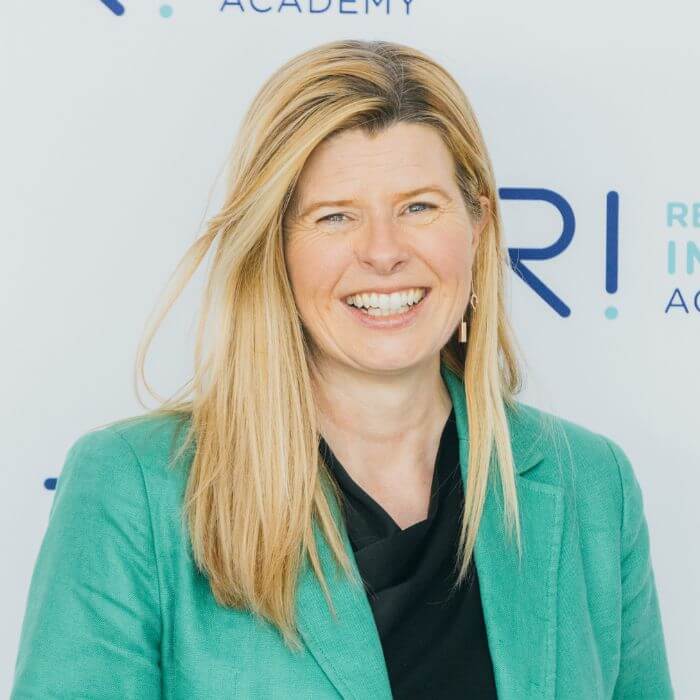
Tamika Heiden, PhD
Dr. Tamika Heiden is the Principal of the Research Impact Academy, where she has trained thousands of researchers worldwide in research impact and knowledge translation. With over a decade of experience across health, sport, and medical research, Tamika advises higher education, government, and industry sectors on embedding research impact practices. Tamika is an Adjunct Research Fellow at the University of Melbourne and sits on the Scientific Committee for both the Primary Care Collaborative Cancer Clinical Trials Group in Melbourne and the Medical Research Foundation at Royal Perth Hospital. She also partners with the SickKids Hospital in Toronto.
Tamika’s work bridges research to practice, supporting high-level strategy and knowledge translation. Her dedication has led to contributions to high-level decision making, including providing evidence to the Senate Committee for the Medical Research Future Fund. Recognised with excellence awards from the SickKids Learning Institute and the Institute for Knowledge Mobilization, Tamika also founded the annual Research Impact Summit in 2016, reaching over 7,300 participants across 101 countries, with over 200 interviews from international experts.
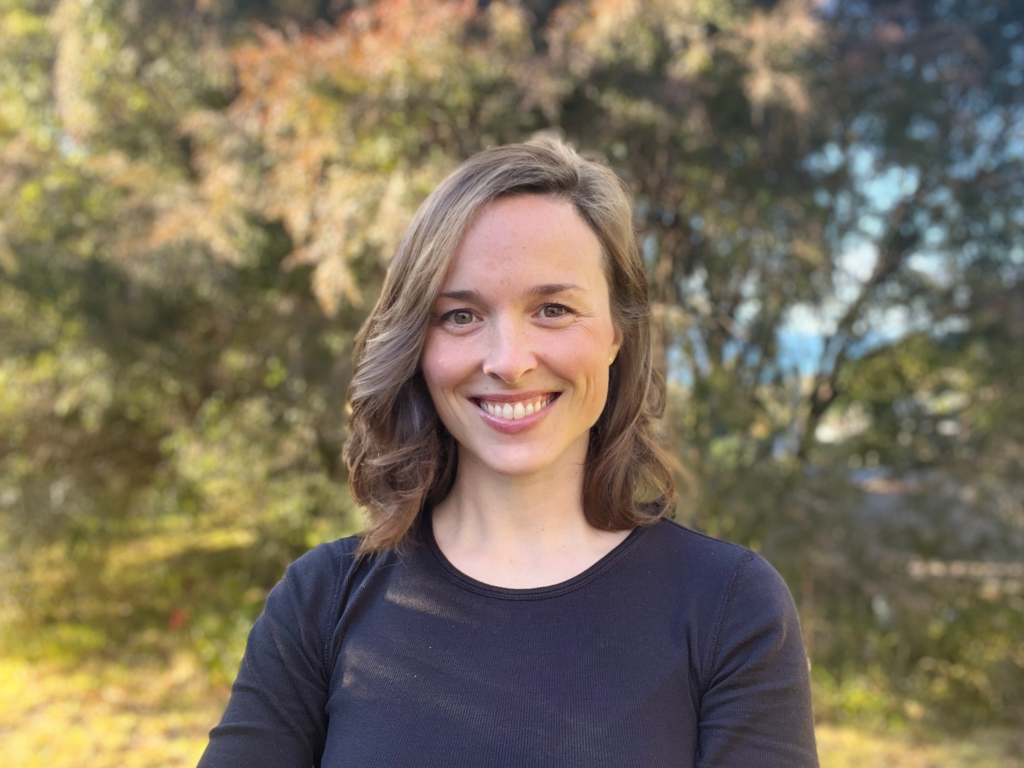
Kate Shook
Kate Shook is a research impact professional at the Research Impact Academy (RIA), specialising in impact case studies, evaluation and reporting. With a background in education, research and policy, she has extensive experience across public and private sectors. Her skills in communication, advocacy, and project management, combined with her teaching experience, allow her to design and deliver content that engages diverse audiences and maximises impact. At RIA, Kate works collaboratively to help researchers create, capture, and communicate the significance of their work, supporting consulting services, training programs, and global membership initiatives. Through her expertise and dedication, Kate plays a key role in empowering researchers to showcase the value of their work, strengthen its reach and drive positive change.