

Professor and entrepreneur, Dr. Chinasa Elue, shares her online presence journey as an academic. From podcasting to the TEDx stage, Chinasa has become more intentional about sharing her story and her research online, encouraging faculty to keep showing up.
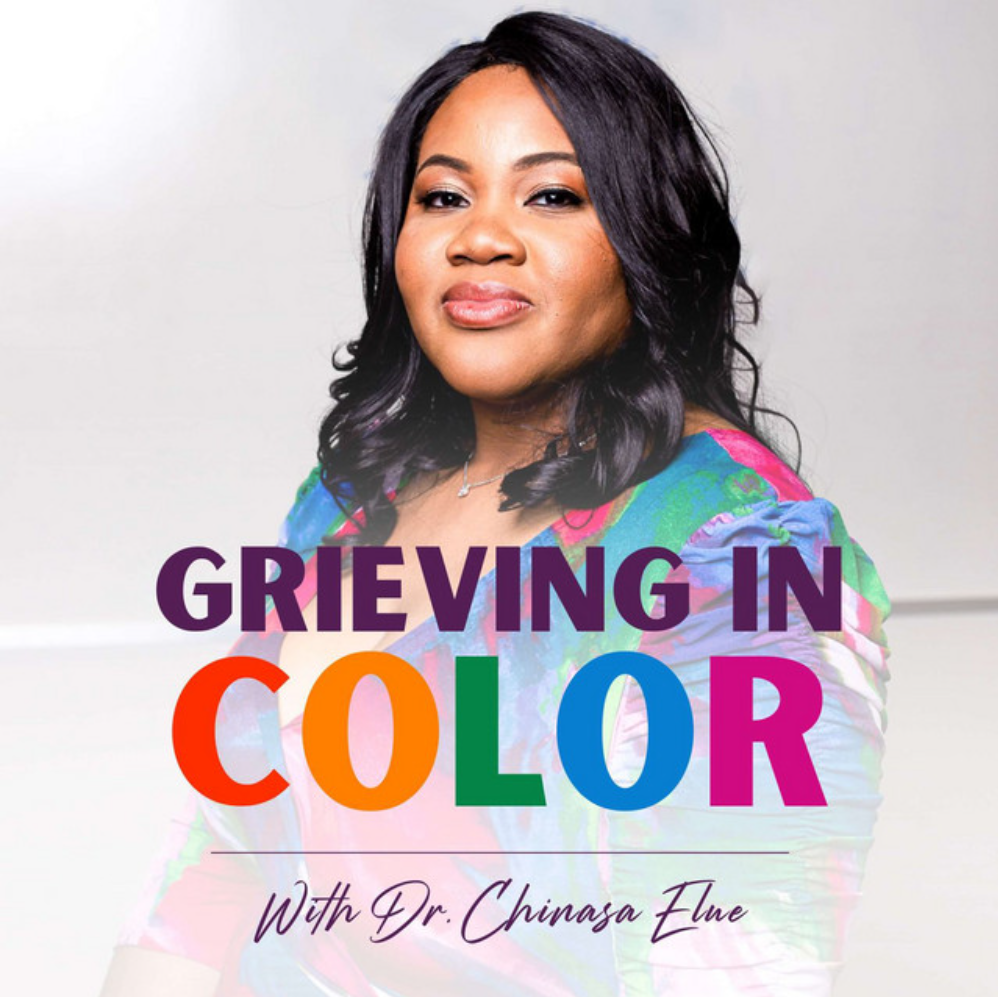
Dr. Chinasa Elue is back on The Social Academic Podcast. Professor, host of the Grieving In Color Podcast, TEDx speaker. Chinasa is someone I’ve been cheering on since we met in 2021. Her online presence has become even more intentional in a beautiful way that invites connection. What’s your purpose, your reason for your online presence?
Being intentional about how you show up online as an academic isn’t about self-promotion. It’s about connection and possibility. This episode is on Connection and Purpose for Your Academic Online Presence.
A full transcript of this episode is below. Thank you!
Subscribe to The Social Academic blog.
The form above subscribes you to new posts published on The Social Academic blog.
Want emails from Jennifer on building your online presence? Subscribe to her email list.
Looking for the podcast? Subscribe on Spotify.
Prefer to watch videos? Subscribe on YouTube.
Quotes
“Just get started. Don’t be nervous. It’s normal. Nerves are normal. When people ask me now like, ‘How did you do it?’ I’m like, ‘I just kept showing up.’ I showed up when I didn’t feel like it. I showed up when I didn’t think I had anything to say.”
“I lean into the thought leadership of it all, recognizing that I have actually a research backed opinion to share and I need to put it out there and it’s okay to get some slack. It’s par for the course, but you will survive and you will show up again and keep it moving. So just start.”
“I have grown so much in a lot of ways. The nerves have shifted. I’m still nervous showing up, right? But one thing that I’ve started to lean into a lot more in this season is my story: owning my story, owning my voice.”
—Dr. Chinasa Elue
Interview
Jennifer van Alstyne: This is The Social Academic Podcast. Hi everyone. I am Jennifer van Alstyne and this podcast is about online presence for academics, researchers, graduate students. And I’m very excited because today I have a returning guest, Dr. Chinasa Elue. Oh my goodness. It’s been so long since we caught up in person, but it’s also been so long since I feel like we’ve talked really intentionally about your online presence. And so I’m very excited for this conversation because so much has changed for you. And I would love to get your story out there so more people can be inspired by the different things that you have really chosen to kind of lean your energy into when it comes to your online presence. Before we get started, would you introduce yourself to people?
Chinasa Elue, PhD: Absolutely. First of all, Jennifer, thank you so much for having me here. It is an absolute joy to reconnect here on your platform. In terms of my introduction, I am Chinasa Elue. I am a full professor of Educational Leadership and Higher Ed at Kennesaw State University. I’m also a grief coach and a grief researcher. I support individuals navigating various types of grief and loss in all areas of society and have been doing this for about five years now, which is really interesting. I’m really excited to share more about my journey here and how I’ve shifted things over the course of time.
Jennifer: I think the biggest thing that I’ve seen you launch since, in terms of your online presence that I’ve seen you launch is the podcast. It’s reached a lot of people and it’s something that you were just considering when we last met. And so I’m curious about that journey. How has it been for you having a podcast? How did you decide that podcast was the way to go as opposed to blog or newsletter or any of the other potential outputs that there could be?
Chinasa: Absolutely. I think in terms of the podcast itself, once I started doing the research around grief, specifically in higher education spaces, I began to reflect on how can this work reach a larger audience. I know that there are various ways to do that. Especially as an academic, we’re used to just relying solely on the publications. But I know that the work had immense support for communities of all kinds. I began to just really reflect on how would I get this message out. And a podcast came up and I was nervous. I think when I mentioned it to you initially because it seemed like everybody had a podcast. And so I was thinking about, “Well, am I going to contribute to this boom or is it going to be different? What’s my competitive edge here with this?” And not necessarily to compete, but what would distinguish me from all of the other podcasts that are out here?
And I think honestly, I just took a leap of faith and I just leaned into sharing more. One, about my story and how I started off with grief work, but then two, being intentional about the guests that I was curating on the podcast. Bringing in individuals to share their stories from all walks of life to really help expand this conversation around grief, which oftentimes is seen as taboo in society. I wanted to just engage in the dialogue at large.
Jennifer: It’s almost like creating space for the conversation. The format for that made the most sense for connecting with people was podcast. Oh, I’m curious, about what percentage of solo episodes to guest interview episodes do you do?
Chinasa: I do about half. So I do half solo episodes and then I bring guests on for the other half. There are different topics that I may share around career transitions and some things that may be research-based that I’ll center those topics on. But I also try to keep my ear to the ground and see what are folks interested in the moment and bring guests on that can really speak to those respective areas.
Jennifer: You’re someone who also is a guest on podcasts and you have your own podcast. If someone is maybe considering starting a podcast, they’re maybe not sure if they want to commit to all of the work, but they’re excited about it. Would you recommend they start with guesting on podcasts or should they dive right in?
Chinasa: I think it’s a mix of both. Obviously before I had a podcast, I was a guest. I was guesting just to get a feel for what does it look like to kind of just talk and freestyle online. It’s very nerve-wracking, especially because again, we’re used to, as academics, we’re used to presenting in a very specific way. We go to a conference, you have your standard 12 to 15 minutes, you get it done and you keep it moving. In the podcast, you control the script. It’s like, what are we going to talk about with the people? You’re thinking about all of the things. And I know for me specifically, I was really nervous about that. I wondered who might listen to this, how might it be applicable? And what was so interesting? I haven’t checked my numbers as of late, but the podcast had almost 3,000 downloads in the first 18 months or so.
And so that really encouraged me in the sense that folks are listening to this topic because it’s relevant and it’s meeting them where they are. And I think if someone is wondering, should they start? You always hear this proverbial thing. Go to the grocery store, look on the breadshelves. How many brands of bread are there or how many brands of water are available? And I think that’s the same in the podcast industry. Your audience will find you. I always believe that we are all acquired taste. I don’t like all brands of water. I don’t like all brands of bread, but I do like specific ones. And those are my go-tos. And so you could become that go-to voice or thought leader in your respective space that people yearn to hear for, but they don’t yearn if they don’t know you exist. So you got to step out.
And I think a lot of this is just having the courage to start because a lot of the things I’ve done have required courage and just belief that this message will meet people where they are and the right people will get it and understand. Yeah.
Jennifer: You mentioned the number of downloads as one of the kind of outputs, the cues that you get that you, makes you feel good about your podcast. I’m curious about what people have shared with you and maybe the messages or words of support that you’ve gotten since you started because I think a lot of people worry maybe not so much about the strangers online who will find and love their podcast, but what their friends and their colleagues might think. I’m curious about what feedback has been like from people in real life.
Chinasa: I always say when I launched the podcast, I was a nervous wreck because again, to your point, you’re worried about the perception of it all. There’s something about just being more outward facing in the online space that sometimes seems taboo in academic spaces. People are like, “Okay, you’re being showy or braggadocious,” or whatnot or you’re just trying to put yourself out there. But I think the reality is, I think in the year 2026, we can no longer as academics afford to not have an online presence. I think the reality of what we are living and walking through, we have to look for ways to continue to expand our reach in our respective areas of focus. And I think a bigger piece of this for me personally is I have done all this research. I feel like I have a responsibility to share the research, to really help support folks who may need the additional strategies or resources, or if it leads to some form of policy change later on down the road, the fact that someone heard me share my story, maybe it might lead to a funding opportunity, might lead to other opportunities to engage.
I think that is very helpful. I would say go for it. Honestly speaking, people need to know your research beyond the proverbial journals. We have to expand our reach in that context.
Jennifer: One of the other ways that you expanded your reach for the grief research that you do is by being on the TEDx stage. I’m curious to hear, what prompted you to want that for your research and what was it like to actually present to just kind of, quite a different audience?
Chinasa: Yeah. It’s so interesting. When I think about my entry point into doing grief work, I didn’t pick this career for myself. I always say “No one grows up and says, ‘Hey, I want to be a grief researcher.’” That wasn’t the thing I went to school to study. It happened via life. When I lost my mom, the experience has been so jarring that my mind, in my right mind I’m like, “How are folks coping? How are we actually coming back and integrating into society after such a devastating loss?” I knew for myself personally when it happened, it was nine months before the pandemic. And I said, “Okay, I’m not in a space to study this now, but I am curious.” And I think my curiosity sparked me going in this direction. When it comes to the TEDx talk itself, what was so interesting was it was around the five-year mark of my mom’s death anniversary.
And actually beyond her five-year mark, it was her birthday month in which the TED Talk was held. I knew in year five that I wanted to do something to truly honor her. It was beyond the research for me. It was more so finding a way to really share my mother’s story in a more public facing manner. And for me, stepping on that TEDx stage in her birthday month and sharing the story of how we were planning to celebrate her 60th birthday. And although we never made it to that mark, this is my way of celebrating her 60th. It meant the world to me to be able to do that. And I think it required a lot of mental preparation and even the physical preparation that goes into memorizing a 17-minute talk from memory and being able to get on stage and do it. That was an exercise in and of itself.
But I thoroughly enjoyed it. And I think that’s this piece around when you asked me the question prior about colleagues and what they may think, we’re not socialized this way. We’re not socialized to be outward facing. We’re not socialized to build an online presence. But again, my intent was never to be outside and known. I think I just wanted to get the message out there. I wanted to be able to share the story. I wanted to be able to have a bigger reach with the research. And that’s why I’ve been so intentional about trying to build a cohesive online presence in different spaces, the TEDx stage included.
Jennifer: TEDx, did they have support with how to memorize things and the storyboarding and stuff? I wasn’t sure how supportive it felt.
Chinasa: It was absolutely supportive. I had an amazing team behind me. I think what was amazing was my coach. Shout out to Tiffany. She was amazing in the process from ideation all the way to the actual practicing in and of itself. The institution I presented at was Sam Houston State University. They were a phenomenal, phenomenal host, took care of us through and through. They have a unique process to prepare us for the TEDx stage itself. I felt thoroughly supported. I just think mentally, I hadn’t memorized something like that in so long. I was like, “I hope I can do it. ” But I did it and I was pleasantly surprised because they gave us the strategies to execute.
Jennifer: I’ve never memorized something like that. I do not think it would be possible, even with coaching. I’m so excited for you. I am so excited because I think that there’s so many people who are even listening to this now and they’re like, “Wow, I didn’t know that maybe this form of public scholarship I was curious about had support that I can have a coach and have people around me who are cheering me on in this kind of new thing.” Did you have any support with your podcast?
Chinasa: Yes. I did. I did. I think this is the interesting piece is, as an entrepreneur, academic entrepreneur, I think an interesting piece with this is that you have to invest in yourself. I know that with the podcast itself, it was going to be an external investment, meaning I was going to come out of pocket and have to fund that opportunity. I did find a podcast coach that came to me recommended from a friend, and I paid to work with her over the course of six months from ideation all the way through to execution and scheduling the episodes just because it wasn’t a normal framework for me. You see things online. I’m like, “Do I just hit play and just record or what’s the process?” And so she helped me walk through the logistics from the scripting to recruiting certain guests to come on the podcast to the themes of the seasons.
And I think that was especially helpful because again, it’s not my natural orientation. And I didn’t want to just be noise in the atmosphere. I said, “I want it to be structured.” And so it was very, very helpful from all aspects, to be honest with you.
Jennifer: Would you mind sharing their name?
Chinasa: She no longer … She has transitioned out of the business.
Jennifer: She’s not doing that anymore.
Chinasa: Not anymore.
Jennifer: I totally get it.
Chinasa: I know. Well actually, I have another one that I worked with for season two. Her name is Rachel [–] and she is amazing. I’ll actually, I’ll send you her information so that you can link her. But the first person I used with the original conception of the podcast transitioned to other things professionally. But the second person who she recommended, I kept on board and we worked in season two together.
Jennifer: Very cool. And for anyone who’s listening, who wants even more support, you don’t just want help getting set up, but you would like a producer to partner with you for kind of figuring out episodes and actually recording them. My friend, Cheryl Lau, who has been on The Social Academic, is someone who has supported other PhDs and academics. Well, she doesn’t specialize in higher education the way that some other folks do. I only work with academics on their online presence. She is an excellent partner. And I actually did a group coaching program with her for my podcast, maybe around season three. It was kind of an add-on because we were doing one-on-one coaching together and I was like, “Oh, I have a podcast. Maybe I should join this too.” And it was so amazing. It really changed how I shaped my podcast and what I wanted to focus on and helped me lean into finding a process that really worked for me and fit. The busier I got, it still fits in.
And so that’s the only reason why we’re having this conversation today, is because I got some coaching and it really helped me. Getting support is something that we can do when we want to be more intentional and we don’t have all of the resources, skills, or time to do it ourselves, there’s options for us to get help.
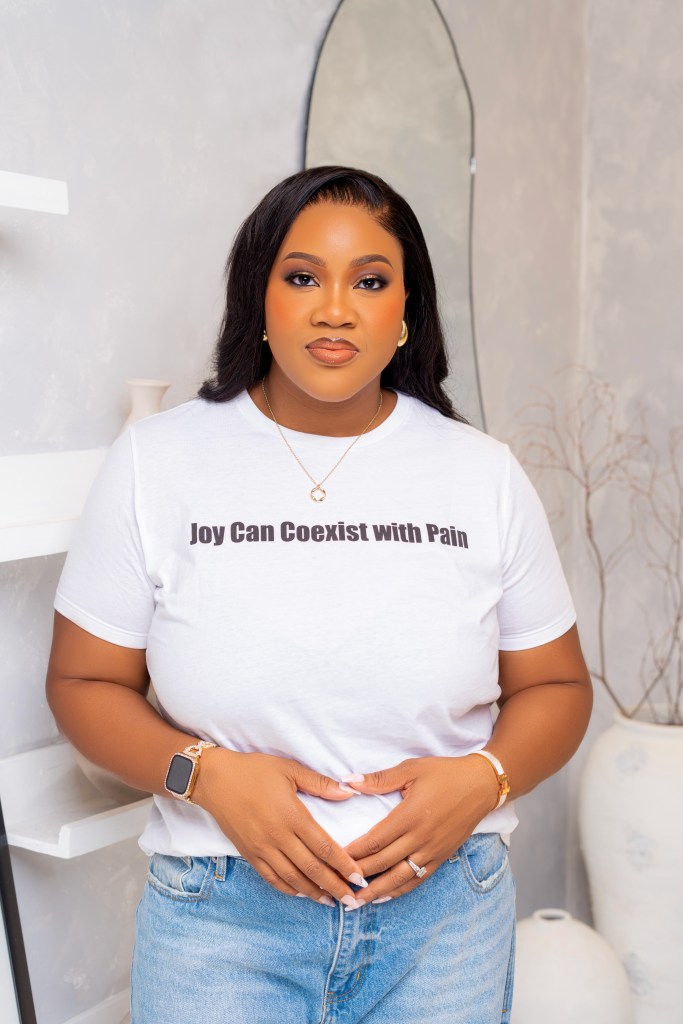
A lot of faculty members, but especially the women that I talk to, they feel uncomfortable, not just maybe investing in themselves in a different way, but especially investing in something that shows off them. And the thing that I am wanting to ask about is photos because you have the most beautiful photos. I’m curious, do you do professional photo shoots? Are you someone who’s always liked photos? Was it ever uncomfortable for you? What is your world when it comes to taking photos?
Chinasa: It’s a journey in and of itself. I think back to, I think when I started being more front facing with my online presence, I did do my original conception of photos back in 2021, and I had, just had a kid. I was all things just not wanting to show my face or my body at the time. Not to shame myself, but I just was in a space for like, “I just got to get it done.” And I did the things. And then recently I did another photo shoot last August actually, last year. And what is so interesting is, photos are an investment. I say that upfront because once you start looking at these prices, you’re like, “Okay, I’m not going to do it.” But I think you have to be willing to invest in some quality headshots. What worked in my favor was at the time I was preparing to go back home to my native country Nigeria, and I said, “You know what?
Let me see what the photography scene looks to see if it’s comparable.” And because I was going home to see family at the time, we were able to find a photographer actually who had a really amazing studio back home and comparable quality and the whole nine. And we went there and it was such a beautiful experience. We did the photo shoot there. I did it back home in my homeland. And so it was phenomenal. I was surprised at the quality of the pictures, to be honest with you. I said, “Okay.” And they had it all set up. Thank you for that. Yeah, I think you got to do it.
Jennifer: I love that.
But I think a piece of just being able to show up online and own your presence is to also present yourself in a way that demonstrates that you’re an expert. People want to see the visual representation of who they’re speaking and talking to. And I knew that going to take these photos was going to help amplify the message and also my brand presence online, which is why I was intentional about the types of images I took. And I had all these events I was preparing for. I hosted a retreat last year and I needed images for different events. I was very intentional with curating that as well. I think it’s necessary.
I picked up on something that I, maybe I’m wrong, but did you do the photo shoot with your family or was it just you?
Chinasa: It was just me.
Jennifer: It was just you.
Chinasa: But my family was in the studio and they were kind of just watching and cheering me on essentially.
Jennifer: That’s what I was wondering because you said we, and I was like, “Were they all there?” It felt like they were.
Chinasa: I had my kids with me at the time, but my uncles were there with me because they were the ones that kind of escorted me there.
Jennifer: I love that.
Chinasa: And they was so sweet. They were cute because I’m their niece and they were like, “Oh, look at her all grown and doing her thing.” So it was very sweet and endearing, to be honest with you.
Jennifer: That’s so good. And honestly, I’ve worked with a lot of academics who are maybe doing their photos for the first time. And I often at times encourage them, bring a friend, bring a spouse or a family member because sometimes getting that real smile, getting that real feeling of warmth or joy that your friends and family get to experience, it’s harder to come out when you’re feeling nervous. And so if you have someone you know who your photographer is totally open with being there, do that. And I’m so glad that your family was there because you can really get that in those photos. As soon as I opened them, I was like, “Oh, I got to ask about the photos.” Okay, it sounds like you would encourage people to take photos. There’s so many people who maybe they can’t afford a professional photo shoot or it just isn’t in their time, but their university is offering new headshots or branding photos for them.
Have you ever worked with a campus photographer on photos?
Chinasa: Absolutely. I was actually going to say even there are student photographers. I’m in Atlanta. We have an art school in Atlanta, Savannah [College of Art and Design], SCAD. SCAD is located here in Atlanta and I’ve had students actually take pictures in the past, at different events and things like that. But there are folks from all price points and ranges. I think you can find someone who’s looking to build out their portfolio who would love the opportunity to take those photos for you because they need the experience and they do a good job. They’re learning their skillsets along the way. I think you can leverage that. I’ve also seen, I’ll mention this really quickly. I’ve seen folks also barter with people based on services. If they know that their price point is out the range, they may trade coaching for some photography. I think there are ways around this, especially if photography is an investment.
I’m not going to lie. I think there’s ways to negotiate and see who might be able to support and help along the way.
Jennifer: I really appreciate you. Thank you so much for sharing that. I think it’ll inspire some people to consider photos for themselves too. I recall seeing you in a professional studio. It seemed like you were recording video. Was that for one of your courses?
Chinasa: Yes. I’m like, which studio? [Laughs]
Jennifer: I don’t know. There was like the big monitor and the lighting set up and I was like, “Oh, she’s in professional video studio this time.”
Chinasa: That is so interesting. I actually was recording a curated course on ‘Leading Your Team.’ And so I was recording just the lesson plans itself in the professional studio and all of those things, but the studio owns the content. I was kind of the instructor of record for it. But it was such an interesting opportunity because you think about what folks on the news do. They’re in front of the camera and they have their prompts and what they’re being told to say. And I think for me in that context, I had planned all these lessons beforehand. And then to be the face of the lesson itself and execute it and teach it front-facing in that manner was a new experience for me because I’m used to just doing the live content and then moving on, but this was very much so scripted and it was a good experience. Yeah.
Jennifer: If someone is considering recording in a professional studio, is there anything that they should keep in mind? Because we’ve recorded virtually. That’s something that, the ring light, we have our water. There’s some things that we can set up and have control over. When you’re in a professional studio, you don’t have as much control. Is there any tip or little hint that, maybe something that you learned while you were there?
Chinasa: Absolutely wear comfortable shoes. I was so grateful because I was standing the majority of the day. I had tennis shoes on the bottom, but I looked professional on top, so I was super comfortable. I think just being mindful of that. We had a makeup person and then they did all the things to get you camera ready because there’s a particular type of camera makeup you need to wear. They took care of those logistics. But I think the biggest thing is just to come in ready to have fun. It can be very nerve-wracking to do this kind of stuff, but I think what was helpful was to know they had a very skilled editing scene that was going to edit out the bloopers and any spaces that I had messed up. And so that gave me a little bit of comfort knowing that, “Okay, you can get in there and just take your best shot.”
And if you mess up, there’s a second and a third and a fourth try again. I think that removed some of the pressure off of me while I was recording.
Jennifer: And just to wrap up, because I feel like we’ve covered so many amazing things already, I’m curious about how your feelings have changed about how you show up online over time. You have grown so much, you’ve invested monetarily, but also energy wise into a lot of different outputs, and it’s really beautiful to watch. I’m curious about how your feelings about that have shifted, maybe since five years ago before you launched your podcast.
Chinasa: Ooh, I think I have grown so much in a lot of ways. I think that the nerves have shifted. I’m still nervous showing up. But I think one thing that I’ve started to lean into a lot more, especially in this season is just my story, owning my story, owning my voice. And I truly do believe that we are all acquired tastes. I am for some people, but not for everyone. And I do believe that my messaging and how I share outwardly online will resonate with some folks and it won’t for others. And I think that’s perfectly okay. I think beforehand, I used to really worry a little bit about maybe, how are my colleagues going to perceive this? What does that look like? It’s all the things that come in your mind when you’re more outward facing. And I think you can manage that.
If you need to block them online or limit your profile views. I mean, there are things that kind of trick your mind initially. I haven’t blocked anyone personally, but I have friends who have done that just so that they can show up and be truly authentic because they don’t want the judgment. But I think you have to just get over the nerves of doing it and recognize for me, the biggest thing has been this is a service. I want to be of service to those that I know this message is for. Me sharing is being of service. And even if I am afraid or worried about how it might be perceived, it is perfectly okay. That adds to the authenticity when I share my story and my voice. And even with the services that I offer at this point, that has shifted for me a thousand percent because I think I am more in tune with who I am really focused on in this current season and I just roll with it.
I roll with it. I make mistakes. I get back up. I don’t let it keep me down. I fail quickly and then I get up and I try again. And I think that’s the piece that has kept me over time.
Jennifer: Thank you so much. This has been such a good episode and I’m so glad that people will get to hear this. Is there anything you’d like to add before we wrap up?
Chinasa: Just get started. Don’t be nervous. It’s normal. Nerves are normal. And I think when people ask me now, “How did you do it? ” I’m like, “I just kept showing up.” I showed up when I didn’t feel it. I showed up when I didn’t think I had anything to say. I kept feeling like I was going to run out of content, but given the state of time, there’s always something around grief that’s related and that’s available to talk about. And I lean into that. I lean into the thought leadership of it all, recognizing that I have actually a research backed opinion to share and I need to put it out there and it’s okay to get some slack. It’s par for the course, but you will survive and you will show up again and keep it moving. Just start.
Jennifer: Inspirational. Thank you so much, Chinasa. I’m delighted to feature you on the show.
Chinasa: Thank you so much for having me.
Subscribe to The Social Academic blog.
The form above subscribes you to new posts published on The Social Academic blog.
Want emails from Jennifer on building your online presence? Subscribe to her email list.
Looking for the podcast? Subscribe on Spotify.
Prefer to watch videos? Subscribe on YouTube.
Subscribe to The Social Academic blog.
The form above subscribes you to new posts published on The Social Academic blog.
Want emails from Jennifer on building your online presence? Subscribe to her email list.
Looking for the podcast? Subscribe on Spotify.
Prefer to watch videos? Subscribe on YouTube.
Bio for Chinasa Elue
Dr. Chinasa Elue is an award-winning professor, TEDx speaker, grief coach, and CEO & Founder of True Titans Consulting Group. Her work centers on creating spaces for authentic conversations about grief to foster more holistic and compassionate support in our communities. She also is the host of the Grieving in Color Podcast, where she explores the many ways grief shapes our daily lives. In her academic role, Dr. Elue serves as a Professor of Educational Leadership and Higher Education at Kennesaw State University. Her research focuses on grief leadership, trauma-informed leadership practices in organizational settings, and the well-being of historically marginalized and underrepresented populations. Dr. Elue’s expertise has been featured in USA Today, Better Homes and Gardens, the Journal of Higher Education, the Journal of Negro Education, the Journal of Student Affairs Research and Practice, and other outlets. In addition to her scholarship and coaching, she serves on the advisory board of Students Without Mothers, a non-profit that empowers high school students without mothers to pursue higher education.
She resides in Atlanta, GA, with her family, where she continues to weave together her passions for research, coaching, and advocacy to create spaces of healing and transformation.

Our past interview on The Social Academic
