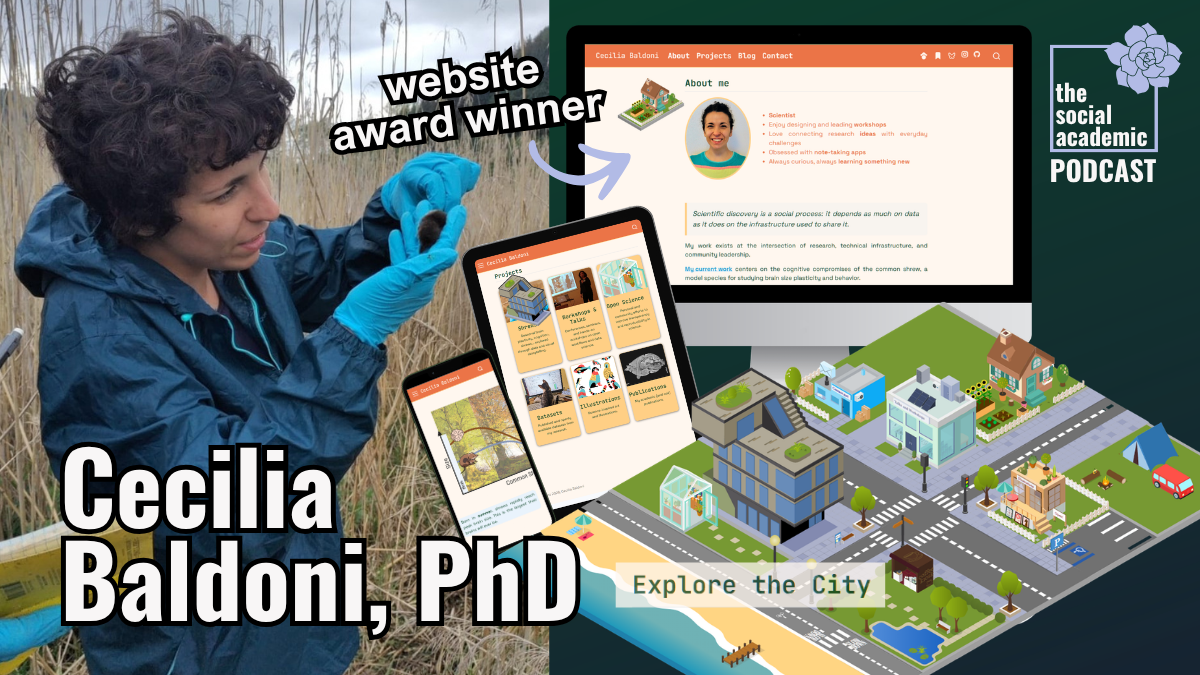
You can create space for your science with a website for your research and academic life. Cecilia Baldoni, PhD’s academic website is great example that your online space can include a lot of things (when you want it to). And, you can make that space feel like you.
Cecilia Baldoni, PhD is a researcher who values open science. She knows that open science can be more than a policy ideal, there are practices we can implement to help more people. Read her bio.
Hi there, I’m Jennifer van Alstyne. Dr. Cecilia Baldoni joins me on The Social Academic podcast to talk about creating her researcher website, which won an award in the Best Personal Academic Websites Contest 2025.
Mentioned in this episode
This episode was recorded and broadcast live on Tuesday, April 14, 2026. You can watch or listen on YouTube, Spotify, and Instagram. A full transcript is below. Thank you!
Subscribe to The Social Academic blog.
The form above subscribes you to new posts published on The Social Academic blog.
Want emails from Jennifer on building your online presence? Subscribe to her email list.
Looking for the podcast? Subscribe on Spotify.
Prefer to watch videos? Subscribe on YouTube.

Quotes
Publish your website
“if you’re working on a website, just put it out because it’s never going to be finished.”
Reactions to her website
“GitHub feels very open and feels like everybody’s out there because it’s public… nobody’s out there judging you. Actually the only interaction I had about this website were overly positive and it’s like a boost in self-esteem as well.”
You don’t have to wait
“For students, what I say: if you think deep enough, you will find so many things that you can add that are unique to you.”
Cecilia shared these questions for students to consider when creating their scientist website:
- What is your contribution that it’s not only a publication?
- Did you present something even with your friends or in your lab and your lab meeting? What was it about?
- What’s your thesis on?
- What is your interest?
- What’s your point of view of things?
- What’s your week like?
- What is like in your lab? How does that work?
Interview
Jennifer van Alstyne: Welcome back to The Social Academic Podcast. Hi there. I’m Jennifer van Alstyne. I am your host. I’m very excited because today we are continuing our series on the Best Personal Academic Websites Contest. This is Dr. Cecilia Baldoni. She has created a beautiful interactive website. I remember the moment that I saw the interactive city that is a way for you to navigate to different sections of her website. I had never seen anything like it before. It was really engaging. I’m so excited for this conversation. Cecilia, would you mind introducing yourself for people?
Cecilia Baldoni, PhD: Of course. Thank you for having me. It’s such an honor. I’m so excited. Yeah. As you said, I’m Cecilia. Currently, I’m a researcher at the Max Planck Institute for Animal Behavior, which is in Konstanz, Germany. I’ve been here for quite a few years now. And yeah, I’m a scientist, but I also love to, I’m very creative and I create all these [web]site projects and very creative projects. And I also love to interact with students and do some training and workshops. Some things that make me interact with other scientists and other people that I really, I really really like.
Jennifer: One of the things that was very clear on your website was your value for open science. That was actually a term that was pretty new to me. I’m from English literature, the humanities. I would love to hear more about open science, but especially what is the story that kind of brought you to this value?
[Cecilia:] Yeah. That’s a great question because I don’t think there was a switch moment. There’s things that you, “I read about this and now I have to put it everywhere.” No, that’s exactly not how it happened. I think it was quite, it happened quite organically. I’m from STEM. I’m a biologist, so that’s something that we’ve been talking about throughout the years. And so in my undergrad, it was something there like, “Oh, we should be more open.” It started with the publications because they’re always behind the paywall and then it moved towards the data that we share or the code that we share. It was, I think for me it was quite, again, very organic. It was also meeting other researchers that have different views about what should we share. And then somehow it happened that I joined some societies which were for being more open and teaching also other researchers how to be, if you want to be.
And I think now it’s also quite a movement because at least if you apply for grants for example, that some funding agency, they require you to be as open as you can be. Universities help you pay for publications if you publish open. There are a lot of things. The conversation really is going on quite a lot. And somehow I managed to be the open science ambassador for my institute, which is like, “Yeah, it’s great,” but it’s also something that really happened out of nowhere and was, yeah, somebody asked me, “Do you want to be here?” “Yeah, sure.” But I think I find a lot of joy out of this and I found a lot of people who think you find a community that thinks the same and you share things and it’s just so empowering as well.
Jennifer: It sounds like the community wasn’t there at the start. It was something that was more in conversation, but then you joined the society, you became an ambassador and you found people who love the same thing you do.
Cecilia: Yeah, and it’s great.
Jennifer:
Open science is really clear on your website. You’ve brought in projects, illustrations, interactivity. I’m curious about ways that you were intentionally open with what you do and what you care about on the website?
Cecilia: That’s a good question. I think, so you mean not only scientifically, but also personally.
Jennifer: Yeah.
Cecilia: Yeah. I think that’s a great point of view because it’s, so we are scientists, we are always trying to hide behind this. Well, nothing we do, it’s kind of coming out of nowhere. Also when you write a paper, you cite, “10 other people said this thing, so it’s not me.” I didn’t [say] this thing, which is quite time consuming, but at the same time it’s very shielding, if that’s a word. It’s like, whatever I’m thinking, I’m trying and researching, it’s either to prove something that I know somebody else said is true or to disprove that I don’t think that’s true, but it’s always based on somebody else’s [work]. And then you find yourself in this situation where you have to pitch, you are the product. Product is a bad word, but you know what I mean?
It’s like you are the brand, you are the project. Yeah. You are the project that needs to be pitched. And then you’re like, “I cannot hide behind anybody else. I cannot cite anybody. The best thing I can do is to watch others. What do they share?” That’s what I did at the beginning when I didn’t have a website yet that was looking around me and I was, “What are other people sharing? What are they doing?” And then they were sharing maybe things that I didn’t want to or maybe they were not relevant or they were not sharing something that, “Ah, maybe somebody didn’t share this, but why not? What would be the worst thing that can happen if I share this information?” And then again, we are scientists, so we go down the rabbit hole of, okay, “If I do this, this might happen and this might happen.
And then you’re doing pro and con of this. “If I share it with them, what’s the worst that can happen?” Nothing. Okay, then I try. And that’s mostly my decision making. You asked me the process, what did I want to share and how I think I went through that kind of system of finding citations, finding others, what are they doing? And then choosing for myself if that was fitting for what I wanted to share or what my brand was or what me as a project, what am I all about? Yeah.
Jennifer: I’m curious as to why you chose a city for that interactive element. Let me just switch over to the screen so people can get a little bit of a glimpse of what this looks like. If you hover over one of these buildings, it will have a little text box pop up so you know what kind of page you’re looking for. Why a city?
Cecilia: I found it very, very funny because I was thinking about this the other day and I found it funny when you said, “I never saw anything like this.” I saw it somewhere. I saw it on another website and it was the institute website. Yeah. I thought it was amazing and I wanted to do something like it. If your viewers want to check, it’s The Max Planck Society. The whole societal, my institute is part of, they have this kind of, city kind of thing where they show there are tiny buildings with all the offices and things where to find information and it’s quite different, the view. The buildings are built different and it’s not the same vibe. Something that I always wanted to add in my website, and there are also animated things moving. There’s a drone flying around and I found it super cool and I wanted to do something like that.
It started all within this, my city, it started all with the research icon and that’s the miniature version of the institute I am part of. That’s how it looks like in real life.
And the city also, somehow it makes sense in my head because for this website, there are so many different parts of what makes me. That city makes sense because there are different buildings that are, mean different things. For example, for context, it’s a post office and for the research part, there’s a research institute and then there is the studio for the illustrations. I mean, when you go around in a city, you do see different things that fit together and they make what a city is. Yeah, I found it very fitting and I copied it from somewhere else and that’s all there is, right?
Jennifer: I’m curious about how you created it. Was it something that you illustrated and coded yourself?
Cecilia: Yes.
Jennifer: That’s so cool.
It was a nightmare. It started with the icon so I really wanted to do. And actually, honestly, I think the research institute icon didn’t start as the goal to have it as this very complex map. I just thought when you land on the page, you see the icon on the top part. That was my goal at the beginning. And then it kind of grew out of me. It’s like, “Oh no, how did this happen?”
Yeah, so it started as drawing it on, of course, digitally and then somehow to put it in this webpage and then you notice that when you hover on top of the icons, they move. And so this was a mix and match kind of situation because you have to coordinate all of this different parts together. That was, it took a bit. It took a while. That’s also something that, yeah, I think maybe we’re going to talk about this later, but that’s the important part for me was that as you see it today, that was not what went online two years ago. It went through a lot of audition and removal and all of this was public. All of this was there. It was not something that, “Ahh, it’s not ready yet. I have to work more.” No, just if you’re working on a website, just put it out because it’s never going to be finished.
And then in two years, for example, now if you go today, the color palette is different. Just because, I wanted to try to see if it worked and then maybe I will change it back.
I love that. That’s why I updated the thumbnails so then we could do this because I was like, “Oh, the colors are a little bit different.” And I like that. I like that things can be adaptable, that we can test out new things and try things out that work. I love that you shared that this was not something the interactive city wasn’t ready, it wasn’t interactive when you first launched your website, so many people would be like, “I need this thing to be done.This is the big thing I want on my website and I need it to be there when it goes live.” But you disagree with that. You want people to publish their websites.
Cecilia: Absolutely, yes. If I can share my two cents and I do that also with all my students, you’re never going to be ready. Just put it out there. Also, because maybe again, it is ready and then two days later you think, “I don’t like this anymore.” The color doesn’t work and then there’s always going to be something you want to change, but that’s the beauty of it. A static website that you put there and you forget, that’s not going to work. And if you’re a researcher, every two months there’s something new: a lecture or conference or a publication or an announcement and you want it to be updated. And that is not only about the content, but also about how it looks and yeah.
Jennifer: You host your website on GitHub, is that right?
Cecilia: Yes.
Jennifer: Have you found it easy to work with? Do you like it? I realize I haven’t had anyone on the show who has used GitHub. I want to hear your feedback.
Cecilia: Yeah. I mean, it all started with Quarto. Quarto is programming language, let’s say, created by Posit, which is the company behind our studio, the software. They created this new way of creating reports and all of that. And that was the, actually that was the only reason why I created a website and I wanted to do it with that because I wanted to learn this Quarto and I wanted to learn how that would be how a website would look and it would work. And so it all started by a place of, “I want to learn this thing and how it works.” But it’s not something you can make course about, or at least for me, it’s always you have to make a project out of it. That sounded like a great opportunity. So I was, “Okay, I want to learn this.
I don’t have a website, let’s put it together.” And in a couple of months there was all of this mess. It was a mess. Honestly, at the beginning it was a mess, but again, that was the beauty of it. There were a lot of broken links. I didn’t know what to do and then you go and fix it and it’s fine. And that’s also why it’s great because I think a lot of people have this idea of ‘Just to be ready because people are looking.’ Nobody is. Honestly, people are looking if you tell them to look. And that’s also what I learned, that it’s like nobody’s there looking at me and what I’m doing wrong or what I’m doing, like what is broken or not. If they do, it’s because they want to help me. The only times where people contacted me to tell me, “This link doesn’t bring anywhere.” It was to help me to fix things.
Nobody’s out there judging you. Actually, the only interaction I had about this website were overly positive and it’s a boost in self-esteem as well because it’s, “I like it too! I really like it. You like it too.” And then it’s great. I think that’s the same thing. GitHub feels very open and feels like everybody’s out there because it’s public. It’s a public repository. You can Google it ideally, but who’s going to? Either somebody is already following you or you have to tell them. It’s like, “Look, you posted on LinkedIn, you posted on Bluesky.” It’s, “I just put out a website. People go there, look at it and tell me.” And that’s what I did at the beginning. There were so many people then going in there, but if you don’t tell them, you have all the time you want.
Jennifer: I really appreciate that. You mentioned something a little bit earlier. I’m wondering if I can ask about it, which is that you encourage your students to put stuff out there. A lot of students who, early career researchers, people who feel like maybe they don’t have enough science of their own yet, sometimes hesitate to create that website space. What would you say to people to have a website now anyway, something they can grow with over time?
Cecilia: If the issue is that, I think there’s a couple of issues. ‘Issues’ is a strong word, but things that could stop a potential student. One is I don’t have enough to say, I don’t have content. I have a page with publications, maybe a student wouldn’t have something to put in there. And the other one is, “I don’t want to be so out there,” which again, that we tackled already. It’s not something anybody should be worried about and actually they should be more out there. For the content, I think students in general, and also because there is this idea that academia and science, it’s all based on publication. It’s a lie because also publications take forever and to reach a point where you have enough to show, yeah, you can wait forever honestly. And I think there is also a bit of, in the open science, at least community, there is a bit of movement away from publication and more, what are your interactions like?
What is your contribution that it’s not only a publication? Did you present something even with your friends or in your lab and your lab meeting? What was it about? What’s your thesis on? What is your interest? Maybe it doesn’t even have to be so specific, but what is interesting for you that it’s maybe more scientific, but also on the day-to-day life or there are some, for example, some views about what’s your point of view of things, what’s your week like? What’s it like in your lab? How does that work? Because I don’t know about you. Me on YouTube, I always watch this process videos, when you see somebody do something from either an illustration or something, but from the nothing stage to the finished product. It’s you like to see the process of things. I think for students, what I say: if you think deep enough, you will find so many things that you can add that are unique to you or maybe not, or maybe you start in one direction and then you’re like, “Oh, this doesn’t work. It’s fine.”
Leave it away and try something else.
Jennifer: You have shared projects on your website in a number of different ways. And one of the projects that has become really interactive is the Shrews page. I’m curious about how you made that because I feel like a lot of people, if they see it, are going to want something similar.
Cecilia: Oh yeah. Oh yeah, that was fun. And that was once again, it was really project related. There was this package I wanted to try coding with, it’s called Closeread, which creates this scrollytelling experience. If you have it in our studio, you download this package and then you can create this page in which you scroll and the things pop up and it’s called ‘scrollytelling.’ I had to Google it. It’s a thing. It’s real. I didn’t invent it. It’s been there for ages and it’s used a lot in journalism because on a webpage, it’s great because everybody scrolls. Also on a phone or nowadays it’s one of the most intuitive things we do and it really creates this experience of diving deep. It’s not a page that, like with written content, is like images and things that pop up, and very interactive and you’re very into the story.
I wanted to learn how to use that. And so I thought, why not put it on my webpage? That was, again, the whole thing. Parenthesis, if you don’t know what to do, what content, this kind of projects are great because you can just take something that you, a paper you read, something and just try a package or yeah, parenthesis.
And that was, again, was something that was in the making, but was online all the time because also on GitHub, if you update something that gets updated on the webpage immediately. That was online, but it was changing and I added things and I removed things. Then at some point I was happy with the end result and I posted it, the link. It was there all the time, but I posted the link on LinkedIn and it was like, “Look guys, this is so cool.” And it got so much traction that I didn’t expect. People really enjoyed it as well. I think also the combination of being a very niche-y topic, not many people know about it and told in a way that it’s very easy to understand. You don’t have to be a specialist to understand this story. That really got a lot of attention.
And then I was asked to give workshops about this or webinar and I was, “I didn’t invent anything.” This package was there, this scrollytelling kind of thing is nothing I need, but people still wanted to know from me exactly how this came to be, what was the process? And I was, “This is so cool because I never thought this would be something.” Traction can come from so many different places that you might not expect.
Jennifer: Is that something you’re open to in the future? I feel like if someone comes to me and they want something, I’m going to send them your way for a workshop. That sounds great.
Cecilia: Yeah, this is super cool. As I said at the beginning, I’m so happy when I can not teach, but tell other people to things that they might be curious on, but I’m not so sure it’s something for me. It is. If you’re curious about it, there’s something for you. Then you can try and then if you don’t like it, you can just throw it away, but still you should try.
Jennifer: I feel like your story is unusual in the sense that you knew you wanted to learn new skills. You knew you wanted to learn new programs that would help you tell your research story. What’s clued you in that learning was the right path here, not outsourcing or hiring someone to create it for you, but that you wanted to do it yourself?
Cecilia: I think it’s just, it might be very basic answer, but I think because I think that we answered it already. It’s like because you learn yourself how to do it. If you outsource things, which is completely fine. I do that all the time with things, but I do that with things I don’t want to do or I’m not so -. Yeah, things that are not so intriguing for me, things that I’m not interested in learning. On the other hand, if it’s something that I really, “Ah, this looks like a cool thing,” I want to learn how to do that. And that doesn’t mean that I do it in isolation. Most of the time I do it in public or with public and with other people. It’s like we share something or somebody share it on LinkedIn and I’m like, “Ah, how did you do that?
Can you help me? Where did you find resources?” And things like that. This is not of course for everything and not everybody has the same interest, but I think if you do have something that got your interest and you want to learn not to be perfect on it or super specialist. I don’t think I am in anything that I shared. It’s not like I’m whatever, a good or absolutely not, but come to a point where you are happy with the result and you’re like, “Ah, this is quite nice.” And I make that and I don’t have to go forward or if I do, “Yeah, that’s also fine,” but it’s also, that’s a point I can be happy with the result and now I can move to something else that I want to learn about.
Jennifer: There are so many people who are in the other camp. They’re like, “I don’t want to learn or I don’t have the time.” But you still would encourage them to be more open with their science. It sounds like outsourcing is a good solution, but not the one you chose for yourself. And I love that you are someone who published your website, adapted it, changed it. It’s going to continue to grow and change over time. I feel like that’s so much better than a static, never changing website.
Cecilia: Yes, yes. I think it gives you also a lot of power over things because the things I do outsource, I don’t have much power over them. Of course, I can say what I want and I can say, but then my power is limited. I’m constrained by my understanding of things, so I can ask the moon, but then the other person’s like, “Yeah, that’s not going to cut it. ” And I don’t know. It’s also gifts, it’s very empowering, but then I think you really said the correct thing there. Time, time is such a constraint. Of course, all the things I would like to learn, oh my god, there’s no time for all of them. Yes, you have to delegate. Yeah, that’s life though.
Jennifer: I so appreciate you. This has been such a good conversation. Is there anything that you’d like to add before we wrap up, especially for people who are maybe at the start of their project and they’re going to be creating their website in the next few months?
Cecilia: I think again, if you have this doubt of, “I don’t know what to do, what to put,” then that’s, I see you, I understand that. Pick a project, something that you want to do that maybe has not much to do with your research or whatever, but you can find a way to make it fit, honestly. And if you feel like I don’t want to be so open, I think you have to remember that you can be as open as you want to be. Also in open science or in anything, it’s a gradient. There is no black or white situation. You can be as open as you want to be, as open as you are comfortable to be, and nobody’s out there trying to judge you. And if they are, it’s because you want feedback and you want help. Yeah.
Jennifer: I think that’s one of the most beautiful parts of having a website space. It can adapt. Maybe it’s a project that you’re unsure of and you don’t want to post it yet, but it’s drafted and it’s ready for you to share whenever that time is right. Thank you so much, Cecilia.
Cecilia: Thank you! Thank you for having me. It was great.
Jennifer: I love it. I love it.
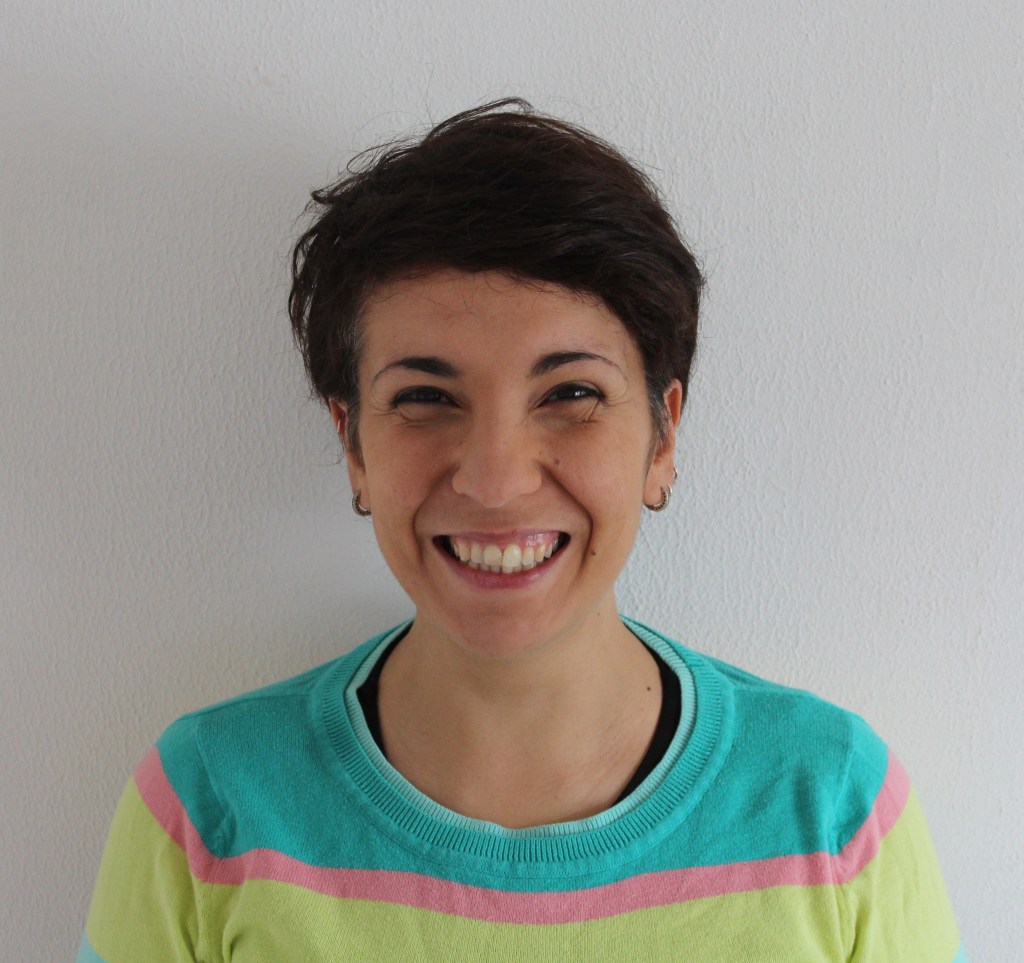
Cecilia Baldoni, PhD
Cecilia Baldoni is a researcher at the Max Planck Institute of Animal Behaviour in Konstanz, Germany, where she investigates how brain structures and environment shape animal cognition. Her current work focuses on the cognitive adaptations of the common shrew, a model species for studying brain‑size plasticity and behavioral flexibility.
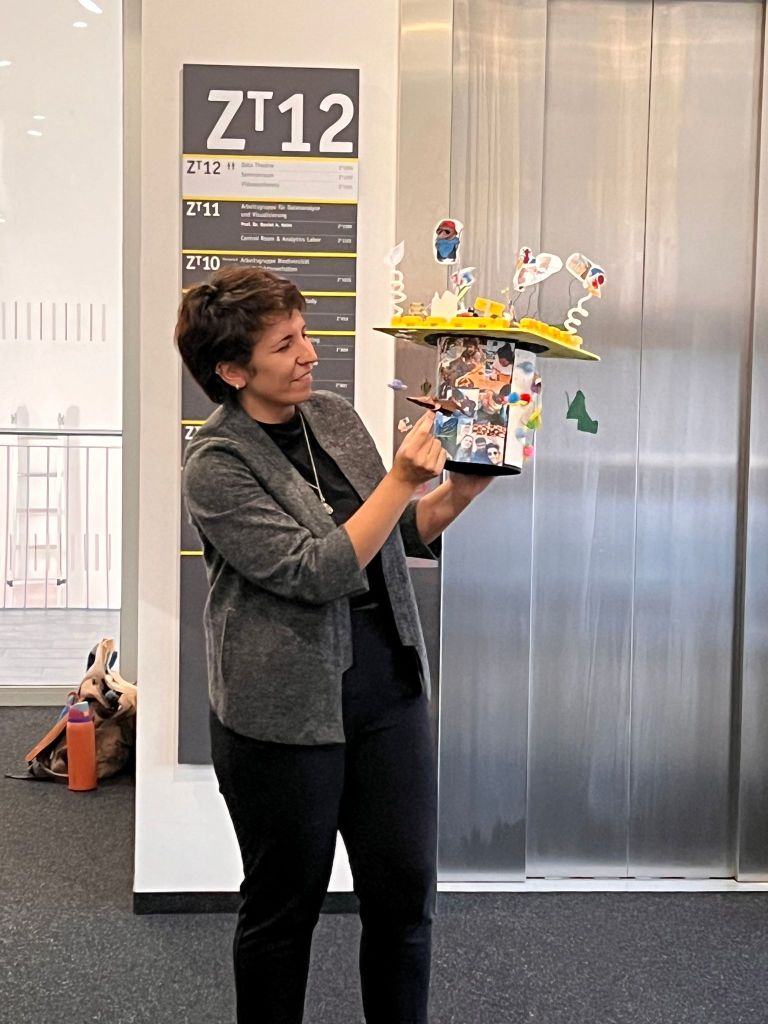
Alongside her research, she leads community operations and open science initiatives aimed at transforming open science from a policy ideal into a practical, everyday workflow. Her work sits at the intersection of research, technical infrastructure, and community leadership. She is an experienced workshop facilitator committed to making complex ideas accessible and connecting researchers across disciplines.
She is also an active member of R‑Ladies, contributing to a global community that supports gender diversity in programming and data science.
The 2026 contest is open for entries! View the entry form and contest opening announcement.
Subscribe to The Social Academic blog.
The form above subscribes you to new posts published on The Social Academic blog.
Want emails from Jennifer on building your online presence? Subscribe to her email list.
Looking for the podcast? Subscribe on Spotify.
Prefer to watch videos? Subscribe on YouTube.