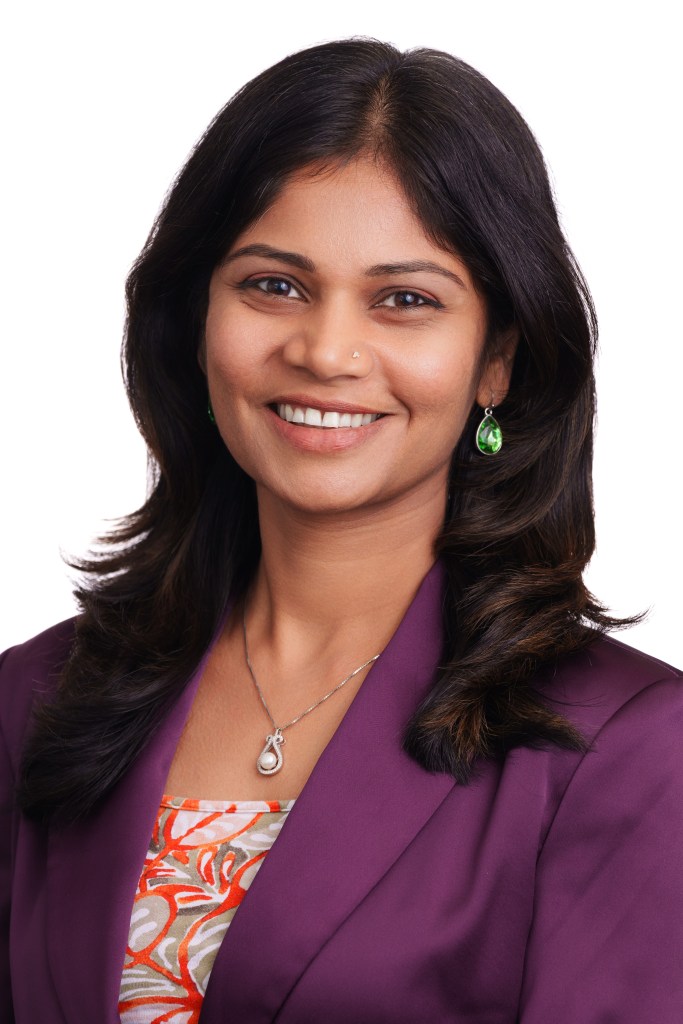
Let’s talk about making an approachable academic portfolio website with Owlstown. This is part of our series featuring winners of the Best Personal Academic Websites Contest. Today’s episode of The Social Academic features Dr. Akshata Naik.
I loved this episode, and Akshata’s website because it shows there’s many ways to create space for your research and science communication online. You can be creative for your academic web page without having to rely on graphic design. Dr. Akshata Naik’s website as a medical educator is a great example of a writing-focused website that still makes an impact.
This episode of The Social Academic Podcast was recorded on Thursday, May 14, 2026. A full text transcript will be added to this post once it’s been fully reviewed by a human. Thank you!
Quotes
Her Faculty Profile Wasn’t Enough
“We do have a page from our university, but it’s kind of locked-in in terms of design and what goes on up there. I am a very creative person; I try to put in my creativity as much as possible in whatever I design, and that was the inspiration for me to start my own website.”
Choosing Owlstown
“I just want something that would replicate my CV, but not in a wordy technical way. I want it to be more like people can click around—a friendlier way to present my CV—and Owlstown provides me with that.”
On Having a Blog
“I feel like we have these false deadlines for ourselves and create that pressure…it’s okay to be free as long as you enjoy doing it.”
Check out more from our series featuring winners of the 2025 contest. Here’s the winners announcement from last year!
The 2026 Best Personal Academic Websites Contest is open for entries. Yay! We hope you consider entering to win one of this year’s awards.
Subscribe to The Social Academic blog.
The form above subscribes you to new posts published on The Social Academic blog.
Want emails from Jennifer on building your online presence? Subscribe to her email list.
Looking for the podcast? Subscribe on Spotify.
Prefer to watch videos? Subscribe on YouTube.
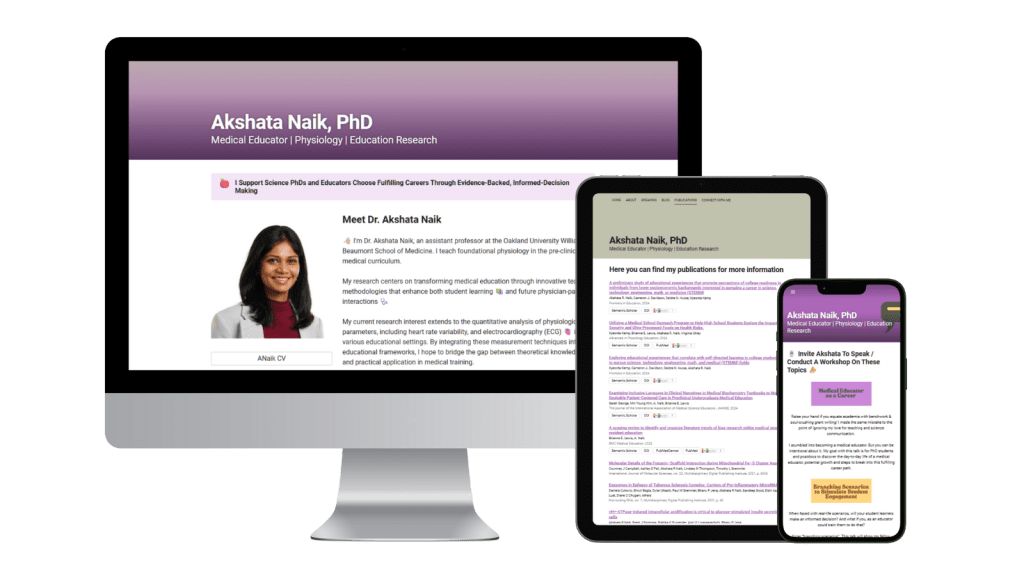
Here’s what Akshata said about creating her website
“I thrive on creativity! Science communication, teaching and new research ideas keep me going. So I wanted to create an online space to portray my work for networking with folks similar to my interests, and importantly serving the broader community via outreach. And being an academician is a good enough reason for building a digital presence as it strategically aligns with my tenure and promotion goals by amplifying the impact of my work beyond traditional boundaries.”
—Dr. Akshata Naik
Here’s what the judges said about Akshata’s website
Interview
Jennifer van Alstyne: I’m back on The Social Academic Podcast. This is an interview that’s part of our Best Personal Academic Websites Contest Award Winner Series where we’re talking with the people behind the website. I’m super excited for this session because this is a more writing focused website and it uses a website builder that I typically recommend and really appreciate how easy it is to use. Dr. Akshata Naik, can you please introduce yourself and tell us a little bit about what prompted you to create your website?
Akshata Naik, PhD: Yes. Thank you so much. Thank you for having me on this podcast. I’m very happy to be here. I really appreciate all your work and I have been watching your episodes and I’ve been keeping, learned a lot from you on how to design websites in general. Your blog posts are amazing. And with that, I would like to introduce myself. I am Akshata Naik. I am a medical educator. I would like to say that I am an accidental medical educator, but now that’s very much part of my professional identity. I’m really proud to call myself that. And if you are wondering what a medical educator is, because that’s the question I mostly get. Very simply, I teach medical students at a medical school and I have a PhD, not an MD. And yes, PhDs could teach medical students in the US and at other places because where I come in and where most medical age educators come in are at the preclinical curriculum, the foundational years that are the first two years of medical school.
And I teach physiology, which is very much a part of really significant discipline, subject discipline for medical students and even physicians beyond. That’s who I am. And yeah, whatever I share on this podcast are my own opinions and thoughts. Thank you. Happy to be here as I mentioned before.
Jennifer: I’m so excited because I feel like there’s so many people that want a portfolio website. They want something that helps share the things that they care about, but they don’t always get over that hump to actually making it. Take me back to that period in which you were first kind of making your website. What prompted you to move forward?
Akshata: I always have wanted a landing page for my professional achievements. We do have a page from our university, but it’s kind of locked in terms of design and what goes on up there. And I am a very creative person. I try to put in my creativity as much as possible in whatever I design. And that was the inspiration for me to start my own website. But initially I didn’t feel that I was qualified enough to do that because you don’t have enough achievements under your belt and that can prevent you from going out there and trying to introduce yourself to the world or expose yourself to the world. It has been quite a bit of a journey. I was working on my website at the back end but never really propagated, promoted it much until much later when I had a few achievements. Yeah, that’s how it went.
Jennifer: It sounds like you made your website but you just didn’t share it as often. Is that correct?
Akshata: Yeah. Yeah. I think that’s what I would say.
Jennifer: But it was published. It was available if someone found it. Is that right?
Akshata: Yes. It was very much available, but I was not active on LinkedIn or rather I didn’t know how to promote it. I always felt like, no, I had to have a paper published for me to -. I never directly promote my website even now because I feel very embarrassed to do that unless I have some sort of poster presentation or some sort of small little achievement and that’s when I went through the website. If people land on my website as mostly due to some sort of news and then maybe they would play around with the buttons and then land on my homepage or know more about me. That’s how I do it.
Jennifer: I’m curious about what are your hopes for people who are visiting your website? Who did you create your website for?
Akshata: I would say that it’s mostly for newer PhD graduate students and also the fellow educator community. These two are my target audience. Yeah. These two audiences are who I kept in mind while designing my website. And I have a few blog articles that are career advice type of things and there are, my research is educational research. Having moved from a bench, work scientist into an educational research [scientist] is a big step and I wanted to share those things with my audience.
Jennifer: I love that. I just met an amazing woman who helps these researchers all around the world with their writing. And one of the things that she said when we were chatting was that when she had her website designed for her, it was a professional agency that designed it. And when she was talking with the agency, she really wanted text because writing was the business. She wanted text to be the main focus of the website. That was something that was really important to her. I think that oftentimes agencies, website designers, they want to make things really visual and visual can be helpful in some instances, but also text is so meaningful and important. And honestly, it’s how most researchers and academics are communicating about themselves. I love that your website is more text forward. It doesn’t rely heavily on images or visuals or videos in a good way.
I think that this is something that sometimes holds people back from creating their website, is like, “Oh, I need all these extra things.” But you’ve done such a beautiful job of sharing your story, blog posts, writing, all sorts of things on the website. Why was writing and text something that was meaningful for you?
Akshata: Yeah, I mean, I agree with regards to use of graphics and then videos. First of all, I’m not a graphic designer. Yes, I’m creative, but then it’s very minimal. I use all the tools that are available and then try to create something and then that’s what I did for my website. And writing is important because that’s a big part of my profession. I write a lot, be it papers, be it reports or be it meeting minutes and things like that, committee meetings and stuff like that. And also I consider myself a writer because I have been contributing articles to college level magazines or even science career magazine. I wrote an article and then now more so than ever. And I was also a medical writer for a brief period of time. I really feel like that’s something that I have control over and writing can be edited so easily as opposed to, you like a visual, maybe it’s popular at that time, but then a few years down the line, you’re like, “No, I don’t like this visual.” And then I have to go back and edit and it’s more time consuming and writing would speak to anyone.
I know a picture is worth more than thousand words, but I think writing can get across the same kind of message.
Jennifer: Yeah. I also, I mean, I’ve heard that phrase a lot, like a picture or an image can speak a thousand words, but my question when people say that is always, “Is it the right thousand words that you’re trying to communicate?” Is it going to speak in the same thousand words to all of the people who are visiting your website or just a select few who maybe know the jargon and know what the graphic looks like? I really appreciate you sharing that. And it sounds like writing is part of your kind of academic output, but also your personality and how you like to communicate things. One of the questions that I have for you is about the blog because a lot of people feel like they want to be writing and they want to have a blog space or a space for articles on their website, but the fear of not doing something regularly, of not being able to commit to weekly or monthly or even quarterly things.
Sometimes that can be a stopping point for people, even though it’s something they dream about. I really like that you created space for your blog. Tell me about that.
Akshata: Yeah. And that’s a great question because if you notice the publication date on my blogs, you would see that I’m not really that regular, although I would love to be, but things happen and I have a full-time primary position that I’m committed to and this is more of a pet project for me. And again, a way to talk about my work to the outside world. What I do is I have a set of ideas. I try to write as much as I can when the work slows down a little bit. But in terms of commitment, yes, I used to fear that I would not be able to commit and everything would fail, but I don’t adhere to that idea anymore. I just do it because I enjoy writing and I think it’s okay if you are not regular with it as long as you’re consistent or you keep doing it for longer periods of time.
And if you don’t find time, if I put a stop to my blog, I mean, that’s okay too. Yeah. I think it’s what I want to prioritize in my life at that point.
Jennifer: I really like that. I’m someone who’s not consistent with my blog or my podcast. I switched to seasonal because I was like, “I can’t literally keep it up all the time and I don’t think that it makes sense to.” Sometimes it’s okay to rest. Sometimes it’s okay to focus on other things. Sometimes I put more energy into Instagram than I’m putting it to the blog and that’s because it’s fun for me at that time and I think that’s really nice.
Akshata: Absolutely. And I feel like we have these false deadlines for ourselves and create that pressure. It’s okay to be free as long as you enjoy doing it, do it at your own pace, unless it’s a pace for your bills and for your other things, then yes, please stick to the plan.
Jennifer: Okay. I want to ask about your website host. You use Owlstown and that’s a website builder from one of the co-hosts of the Best Personal Academic Websites Contest, Dr. Ian Li. Tell me about how you came to choose Owlstown. Did you explore other options?
Akshata: I did explore other options. You know, the popular ones with Squarespace. I actually don’t remember how I stumbled upon Owlstown. It’s either through LinkedIn, through your website. I really don’t remember, but the moment I saw Owlstown, I felt like it fit my needs honestly, because I don’t have a small business. I do not own any particular product. I steered clear from the professional website, those really fancy website builders if you will. And Owlstown is such a great platform because it is made for people with PhDs and academicians, professors and things like that. And they have really cool templates. Yes, the choices are limited, but if you’re creative enough, you could make it work for you. And for me, if you ask me what I want from my website, I just want something that would replicate my CV, but not in a wordy technical way. More like people can click around and a friendlier way to present my CV and Owlstown provides me with that.
I really like that platform and my website has been on Owlstown for a long time now and I don’t plan to, intend to change that really.
Jennifer: Oh, that’s really cool. Did you find the initial setup took a long time?
Akshata: Not at all. Initially, yes, I had to, like any other tool, you have to get used to it, you have to click around, play around, but the founder is very accessible and then the newsletters were very helpful. I know Owlstown comes with regular newsletters, But Ian was very much accessible. I used to write to the founder and then I would get an instant response.
Jennifer: Oh, I love that. Okay. I really enjoy hearing that. And I didn’t even know about the newsletter. That’s so cool that has been a helpful resource for you as you were building your Owlstown website. Oh, cool. Okay. If people are listening, there are many, many, many website options for you. Owlstown is really great if you’re looking for something simple that you can set up quickly without having to learn how to design a website or do any code. They have a lot of built-in features and one of the things that I really like about it is it’s gotten more creative over time. One of the things that you said was that there are limited templates, there’s limited choices and honestly, that’s a good thing. I design WordPress websites for people and there’s a billion choices that you could make and that’s great for me.
That gives me lots of flexibility and options. But if you’re not already a website designer, which most academics are not, that might be overwhelming. It might be too many choices. And so having the guardrails on can actually be a really helpful constraint. And one of the things that I’ve seen in the contest entries for the Best Personal Academic Websites Contest is how much more creative people are getting with those themes and templates in Owlstown. I was shocked by the websites last year to see how much they’ve changed from even the early years of Owlstown. People have really found ways to show their personality and show who they are and what they care about on the websites, even with those constraints. And that kind of brings me to my next question, which is about personality. You have this lovely kind of violet and purple, you use emojis in your writing.
I’m curious about the ways that you have intentionally brought personality into your website because honestly, a lot of academics feel like they need to tamper that side down or kind of dim their personality and I really like that you leaned into yours.
Akshata: Yeah. That was intentional. Even my slides, whenever I present them, they’re very colorful and I’m often told that very clearly and I really wanted that to shine through my website as well. But at the same time not be too colorful where it takes away your attention or focus from the contents of it. I try to maintain a balance and that’s how I designed it. And like I said, I try to bring that creative side of mine into designing my webpage. And yes, and everything you said about Owlstown is so true because it was literally dragging and dropping things on it or directly typing on the platform. And it’s very easy to sort of create or even link to different pages to have that flow. And yes, you don’t need a host. You can directly build your website on Owlstown and launch it as opposed to build it on WordPress and then find a host.
Yeah. All those things I was able to avoid and you could be really creative. Even with limited options I have created some images, added blocks, colored blocks and rectangles and then some of them are clickable because the ones that are clickable are all sound elements, but I added a blank space and then superimposed my images on it. To make it look kind of seamless. Even though it’s a template that’s from Owlstown, I did tweak it a lot to be what it is at this point.
Jennifer: That’s very cool. I’m curious about the emoji use because I feel like a lot of people avoid emojis and one of the things that you said, I just wanted to repeat it because I think people should hear it again. And that’s that your presentations and how people are experiencing you in person include these aspects. They’re colorful, they include emojis and that comes through on your website. I think that if you are someone who has a personality where people can see how colorful you are, don’t hide it on your website You should appear as though people are connecting with you in person. How you want people to see and feel who you are in real life, that can shine through on your website and I really like that you did that with yours.
Akshata: Yeah. Thank you. And I mean, like how people think about academicians in general. They’re brooding, dark people who don’t like to mingle, who don’t like to network outside of their own social circle. Yeah, I just wanted to make sure that I’m a friendly person. Yes, I’m open to collaborations, but I’m also open to if you just want to have a quick chat, [say] a grad student. I wanted to break those barriers and easier for people to reach out to me, even students in this case.
Jennifer: I love it. I’m curious if you have advice or maybe things that came up for you that were a struggle that people could learn from, for people who are just starting to create their personal academic website. And I ask because the contest is actually opening again in mid-June. So hopefully people who are watching this will be inspired to create their own space online, even if they don’t already have one. What advice do you have for people who are at the start of their website journey?
Akshata: Yeah. I would say that first and foremost, what is it that you want to achieve in the next five years? Three to five years, and what is your professional identity? What is it about your job or your career that speaks most to you? In my case, I would say if you look at those pages on my website, I have one my publications, one for my blog, but also one for speaking because that’s part of my profile. I really do want to expand [it]. I want to highlight those speaking opportunities in the past that I have come up with and I have spoken at these many places. That was my goal with the website. But again, just because you do not identify what it is doesn’t mean that you should not create a website. You could still have your homepage, your about page and publications.
Just start with three pages and then you can build it over time. And it can change over time, too. Five years down the line if I think, ‘Okay, maybe I want to add something else in addition to my speaking page,’ then I would do that.
Jennifer: Is there something that you dream about adding to your website in the future?
Akshata: Maybe a podcast page.
Jennifer: I love that. Oh my gosh, what would your podcast be on? Similar topic to your blog?
Akshata: Yes. Yeah, definitely similar topic to the blog. And I do have some ideas for the blog and I want to be more regular with it, create themes and then put out some articles out there and have a podcast series based on those articles.
Jennifer: This is so cool. I’m so happy that we had this discussion. I feel like there’s so many things that we can learn from each other when it comes to creating websites, creating space online. I’m so appreciative that you shared your story with us. Before we wrap up, is there anything that you’d like to add? Is there anything that we should have talked about that we missed?
Akshata: No, I think we pretty much covered everything and thank you for being a wonderful host. You’re very welcoming and I had really, good fun chatting with you.
Jennifer: Me too. All right. Thank you everyone. Be sure to check out the other interviews in the Best Personal Academic Websites Contest series. If you’re watching on YouTube, I will be linking to those around the screen and I really appreciate you. Be sure to check out the free resources on The Social Academic Blog to help you make your own website.
Subscribe to The Social Academic blog.
The form above subscribes you to new posts published on The Social Academic blog.
Want emails from Jennifer on building your online presence? Subscribe to her email list.
Looking for the podcast? Subscribe on Spotify.
Prefer to watch videos? Subscribe on YouTube.
Bio
Dr. Akshata Naik is a medical educator primarily involved in physiology education and curriculum building for medical students. She researches best practices on innovative teaching of physiology in addition to identifying psycho-physiological parameters of learners in various educational settings and has led workshops based on her research. A budding academician, Dr. Naik is passionate about scientific communication and is enthusiastic about sharing her professional experiences with STEM Graduates.