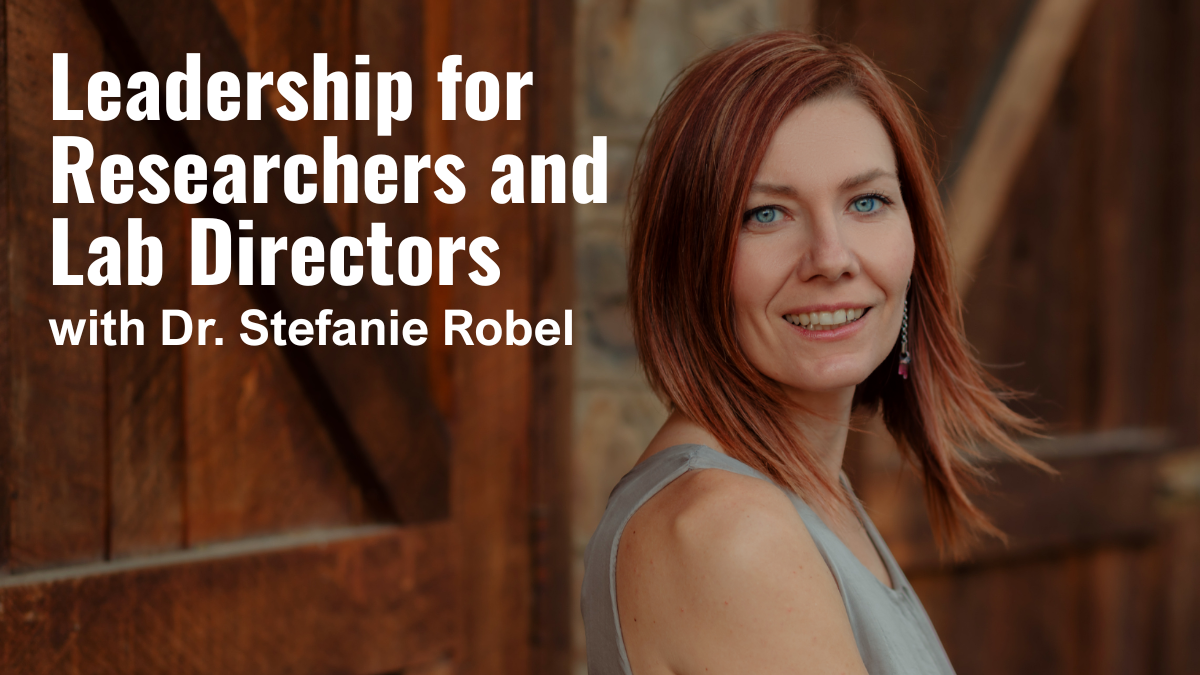
Research lab directors, program directors, and future research leaders listen up. This episode is for you (especially if you’re an overcommitted researcher). I talk about leadership and management skills for researchers with Dr. Stefanie Robel of GLIA Leadership. Let’s talk about research leadership mastery.
This is The Social Academic, a podcast about online presence for faculty, researchers, and graduate students. Hi, I’m Jennifer van Alstyne. I help academics like you feel confident when you show up online. You have agency in creating a stronger online presence for yourself. Let’s build a strong digital footprint through your academic website, social media, and bio writing. Read the blog.
Subscribe to The Social Academic blog.
The form above subscribes you to new posts published on The Social Academic blog.
Want emails from Jennifer on building your online presence? Subscribe to her email list.
Looking for the podcast? Subscribe on Spotify.
Prefer to watch videos? Subscribe on YouTube.
Interview
Jennifer van Alstyne: This episode of The Social Academic Podcast is all about research, leadership. I’m so excited that Dr. Stefanie Robel of GLIA Leadership, did I pronounce your company name right?
Dr. Stefanie Robel: Yes.
Jennifer: I’m so happy that you’re here to chat with me today because I know that there is professional development out there that researchers can get to gain these skills and I want you to have an amazing resource. Stefanie, would you introduce yourself to folks?
Stefanie: Sure. Thanks Jennifer for having me. My name is Dr. Stefanie Robel. I am faculty at one of the R1 US research institutions, but I’ve also started a business a few years ago, I think for real in 2020, that helps faculty kind of gain a leg up and acquire these skills that were expected to have when we start our research programs, but typically don’t learn during our training.
Jennifer: I feel like that’s true of so many different areas of academic life that there is training that we can get, but sometimes we don’t know about it. And so I’m curious about how does someone know that they would really benefit from this? I know you’ve talked about overcommitted researchers in the past. What is an overcommitted researcher? What does that look like?
Stefanie: I mean there are a few tell tale signs, and I think practically what that may look like on someone’s calendar is back-to-back meetings or commitments, always the next deadline that you have to work toward, work pushing into evenings and weekends. And so that’s on the logistical side. I would say how this feels on the inside side is probably you are feeling stressed constantly, maybe even so much so that seems normal. And then I think other signs would be you’re not sleeping very well or I don’t know, you don’t show up with your team or even with your family, with your partner, children, pets in my case. The way that you can show up and want to show up.
Jennifer: It sounds like in your case you felt like that overcommitted researcher in the past and then developed solutions to move towards the goals and skills that you wanted to build. Can I ask, if someone is feeling, oh, I’m in the overcommitted box and I’m wanting to move out of it and wanting to have more agency in my leadership, maybe what are their first steps?
Stefanie: Yeah, I mean I think the first thing is realizing that it doesn’t have to be that way. I think there is this big myth that we’ve collectively bought into in academia and especially here in the US but we at GLIA Leadership actually worked with people worldwide and it’s not the unique problem. But collectively we bought into that myth that in order to be successful in academia we have to work hard and we have to work all the time. And I think being willing to let that go is probably the first step I would say. And then though I will say that there are also skills related to the topic that are not just, hey, the next time efficiency or productivity hack. I would say a more foundational work on how you set yourself up, your own behaviors, but also systems in doing the research, interacting with the team if you run one and having the leadership skills to get out of this, “I’m doing it all by myself and I’m responsible for everything,” to really leveraging a team.
Jennifer: If people, they want to manage their teams with more intention, care, thoughtfulness and take care of themselves, practice that wellbeing, what do they need to let go of in terms of their schedule or their lives? Not just the mindset shift, but is there more substantial changes that you know these are the things that people tend to fall into traps for?
Stefanie: I think a big one is, I think we all have little addictions in terms of our behaviors and for myself I can say that running on urgency or running on adrenaline can actually feel pretty exciting for a while, and maybe for some people that’s actually sustainable for long term. I just know for myself it’s actually not. And so understanding that, or being willing to let go of that urgency as a leadership style, maybe for ourselves and also for our teams, is one thing that I would let go of. Another thing is this guilt about, “Hey, if I say no, I let people down.” That’s another thing. And also maybe the realization that truly what we as individuals can do is actually maybe different and it kind of depends on what the level of resources are that we have available and also the level of responsibilities that we have. And maybe this comparison, comparing myself to the colleague next door is not particularly helpful because what my life looks like and what their life looks like may be very different.
Jennifer: I feel like that’s especially poignant. I know the kind of topic of this show is online presence for academics and I’ve met a lot of faculty who say “I kind of want to be on social media. It’s not really my thing, but I see all of my colleagues, they’re much more active, they’re already doing the things and they’re so,” almost loud about it that they’re not sure how they themselves fit in as research leaders wanting to share their research, but feeling like everyone else has more space or is intentionally creating that time for themselves. I would love to hear a little bit about your program and how people can work with you to develop some of these skills.
Stefanie: We have a number of programs. One that is upfront my mind right now because I’m actually redesigning it is Research Leadership Mastery. And so when we work with people, we follow a process that we came up with that we call lit, LIT. And so LIT stands for learn, implement, transform. And when we talk about resources that people have available to learn these kind of leadership skills that you need in order to run effective teams and effective research programs that really make a deep impact. It’s of course important to learn skills and universities often have resources available to learn some skills, to learn some frameworks on leadership or some tools, possibly even some interventions that you can do or courses to learn communication skills, things like that. But where I often see these resources is on providing support for people to implement this newly learned about skill.
It doesn’t become a skill until you do it. It’s like with any kind of research techniques that we learn, reading about them in a paper is one thing. Making that work in your lab is a whole different story and it’s very similar with these leadership skills. They stay cognitive or theoretical I guess until you are capable of deploying the right strategy in the right moment. And so that’s the “I” part, implementing, which is why we typically work with people over the course of about six months. And they go through this process of learning an aspect about leadership, some tools and these modules that we design, they are centered around real pain points for people. You talked about overwhelm, but that’s just one aspect. Having a team structure or team dynamics that are kind of autonomous in a sense. The idea being you can leave for months and your team runs exactly like it would if you were there. Those are kind of goals that we’ve worked towards with people over this course of six months. And so it’s structured around a little bit of learning, but then a lot of support for implementation.
Jennifer: I love that. Okay, so now that I’ve heard about this Leadership Mastery program, I’m curious about who should join. Is this just for lab directors? Is it for researchers that have leadership roles, program directors? Who belongs in the program and who is it maybe not quite the right fit for?
Stefanie: One thing that I really enjoy when we take groups through the programs. It’s typically the assemble group and they work together over this course of six months, which also provides super nice peer support and the realization that often the things that we think are personal problems are really just part of the job. Many people experience them. And we work with researchers across different career stages starting with I would say a postdoc who has decided I want to be in some sort of leadership position, maybe in academia or maybe in industry. And so I want to leg up and I want a little bit faster start than the person who figures it out all by trial and error, which can be problematic when it comes to leadership. To new PIs [Principal Investigators], to mid-career PIs and also folks in academia like faculty who have taken on administrative leadership roles.
Jennifer: Oh, that’s really helpful. I feel like I know people who’d really benefit from this program, so I’m going to reach out to them personally. But I also want everyone who’s listening to know I don’t receive any money or gift for recommending this program to folks. Stefanie is someone I’m sharing with you because I trust her and I trust her to be able to support you. Dr. Robel, I just want to check on the pronunciation. I am curious, I love your program. I’m wondering how much of it came out of your own personal experiences and if you’d be open to sharing a bit of your story with leadership with us?
Stefanie: We can stick with Stefanie. This was maybe interesting in that as a postdoc, I kind of ran into this challenge that I wasn’t entirely sure anymore whether academia is really for me. And part of that was I experienced a lot of stress as a postdoc that was kind of different from what I had experienced as a graduate student. As a graduate student. It was about the science and there were plenty of opportunity to exchange with other researchers. There was this openness of time I would sit in front of the microscope, for example, taking images for hours and it wasn’t like I’ve had pressure to now also write a paper while I was doing that. It was like I sat there, I looked at the images as they appeared on the screen. I thought about this in the context of my research question.
Sometimes I was bored. Sometimes I read a book or something, like fiction. As a postdoc. I moved to the US from Germany and I don’t know if it was the shift in career stage or this geographical shift, it became a little bit more productivity, productivity, productivity. And given that there weren’t manuscripts to show for a few years, that caused a lot of stress. And so I started thinking, is this really what I want to do for a career? And one thing that became very clear during that point in time, my PI struggled with funding. And I learned pretty quickly, ‘Hey, if you haven’t mastered this game of grant writing, you may as well completely forget about this career.’ These seem like different stories, but they will come together, I promise. One day I come across this email, and this was back in the day a little bit before we got spammed with a ton of invitations to learning programs all the time, and it was about grant writing and I’m like, “Oh, it seems like that is something that I need to learn: how to write grants.”
And this way I kind of stumbled into this, “Oh, there’s a whole different skillset that you learn and there are actually resources out there where people thought about systematically how to develop these type of skills in researchers.” And so rather than this, I think apprenticeship model approach that we use in academia that is you get into an environment, you observe, you do yourself, maybe you get some feedback, but you essentially soak up like a sponge the stuff you need to know. I started questioning that because I think that works for some things and for some people, but that also requires a lot of trial and error. And coming into this world of, “Oh, there’s actually somebody who as a business, as a profession teaches other people how to write grants,” that was an interesting concept to me. And so through this I also came across, “Oh, there are these life coaches out there who help people overcome their,” I dunno, “inner hurdles that they’ve built up.” There are actually different ways to look at the world. I stumbled into this world and it was really helpful in that first of all, I explored it as an alternative career. I’m like, “Oh, maybe if I wanted to leave academia it would be cool to be a life coach and help people with their stuff.” But secondly, I thought, ‘Hey, before I leave, before I make this pretty drastic career decision after having developed quite a bit of momentum in this career, maybe I should check if it’s me.’
And I think there are actually some environmental challenges in academia, and I also believe at the same time that we have a lot more control than we sometimes give ourselves credit for, and part of that is taking charge of developing skills that we don’t have.
Jennifer: Do most people pay for the program with professional development funds or research grant funds?
Stefanie: So, different ways to pay for it. We’ve had people pay using training grants, actually program officers do like to see this kind of resource being spent. Some of the funds on startup funds, sometimes people use departmental funds or professional development funds, and every so often, occasionally we also have somebody who says it’s really worth my wellbeing and health and enjoyment of my career to invest personally in this.
Jennifer: Oh, I’m so happy you shared that because I feel like there’s so many people who are listening to this who are like, “Wait, I don’t know how I’m going to approach this.” And you gave so many different options for ways that you could ask for or even write into grants funding to support this kind of skills training. Once people go through the program and they’ve not only developed skills, but practiced implementing them and learning from each other as part of that group. I’m curious, what is maybe a story of someone who really had an outcome that they were hoping for? I guess that’s what I’m curious about, the outcomes from once people have gone through the program
Stefanie: They can be very different from person to person. I think one of my favorite stories is a colleague who actually for a while then led some of our programs for us, who had just obtained tenure but felt kind of deflated. And it’s like you work really, really hard and then you see or experienced on the other side it’s also not really that different except now the expectations are even higher and the demands on your time. But it’s not necessarily that you feel much more safe or that your income is so much higher or any of the kind of illusions. Life is not easier, work is not easier. And so I would say her biggest transformation was in number one, giving herself permission to design her work the way that was more enjoyable again, but then secondly, also kind of develop the skill and make this mindset shift from, “Oh, when I have conflict or challenges with somebody who isn’t performing to expectations. There’s something wrong with this person,” to, “Oh, let me look at our systems and see,” and I’m not saying you’re not the good mentor, but sometimes our systems are just not supporting the folks on our teams in the ways that they need to be supported.
That’s one thing. I think one thing that we see really often happening is people just feeling really supported because they realize they’re not alone in their challenges and giving themselves permission to, I have one client who likes to say, “I don’t just want to be the little professor, the good little professor.” Allowing themselves to not be only the good little professor, but to take more ownership of their decisions and being less worried about bad consequences because I’m not saying yes all the time.
Jennifer: Once you go through this program, it sounds like you have more agency in your own decision making and you’ve practiced implementing some of the things you learned, so you have more tools and skills at your disposal when working with your team. I love about this. I am curious about, let’s say there’s researchers who are listening to this. They don’t have the funding, let’s say in the spring semester to move forward with a program like this, but they want to start practicing and improving their leadership and they’re planning to write it into a grant for future funding. What would you recommend someone start with if maybe they don’t have the support of a program quite yet?
Stefanie: One thing that’s easy is we have a newsletter that goes out every Sunday. We share little leadership system tricks and stories also in this newsletter sometimes expanded into a blog. So that’s a pretty straightforward resource that I could recommend. And I also just love talking to people. I am always open to meeting with someone for 15, 30 minute little coffee chat and just hear what’s going on. We do also do occasional of fellowships for people who are either at earlier career stages and covering the program costs by themselves or who work in lower income countries to enable their participation.
Jennifer: Oh, I’m glad I asked about that. I feel like there are so many things that people can do to improve how they feel about their job, but also the processes and systems that they implement with their team. I’m really happy that we have this conversation. Before we wrap up, I’m curious if you have any hope or thoughts that you want to share with folks who are listening, especially as we’re coming up on the end of the year. Anything you’d like for folks to bring into the new year with them?
Stefanie: I am a big fan of really appreciating how far we’ve come and actually I’ve come very far in that I’ve learned and I’m part of an environment where we are constantly working on our coaching skills and leadership skills. And one big takeaway that I’m getting from this community is that it is really, really important that we actually give ourselves credit for the work that we do put in. And sometimes I think we’re fast to dismiss this and just move on to the next thing. I think coming to the end of the year is actually a great time to reflect on what has all worked and what has all happened in 2025 and maybe share that with our teams. And then I’m also a big fan of being strategic and systematic about what’s next. We actually do have a little bootcamp at the beginning of January 5th through this first week and where we share our process for this kind of strategic planning. And I think that’s a good idea. You can only go far if you know where you’re going and if you know how to measure whether you’re on course.
Jennifer: I so appreciate you and I’m going to get that link for the bootcamp. If registration is still open, you’ll find the link below the video. Stefanie, is there anything you’d like to add before we wrap up? I have really enjoyed our conversation.
Stefanie: Yeah, thank you so much for the invitation, Jennifer. It’s a lot of fun.
Jennifer: Thank you everyone for listening. This is The Social Academic Podcast. Please like this video, subscribe and share it with a research leader that you know. I really think that this conversation may be a spark for them. And so please share this with a friend. Thank you so much for listening and I wish you all the best for the end of your year!
Subscribe to The Social Academic blog.
The form above subscribes you to new posts published on The Social Academic blog.
Want emails from Jennifer on building your online presence? Subscribe to her email list.
Looking for the podcast? Subscribe on Spotify.
Prefer to watch videos? Subscribe on YouTube.
Bio
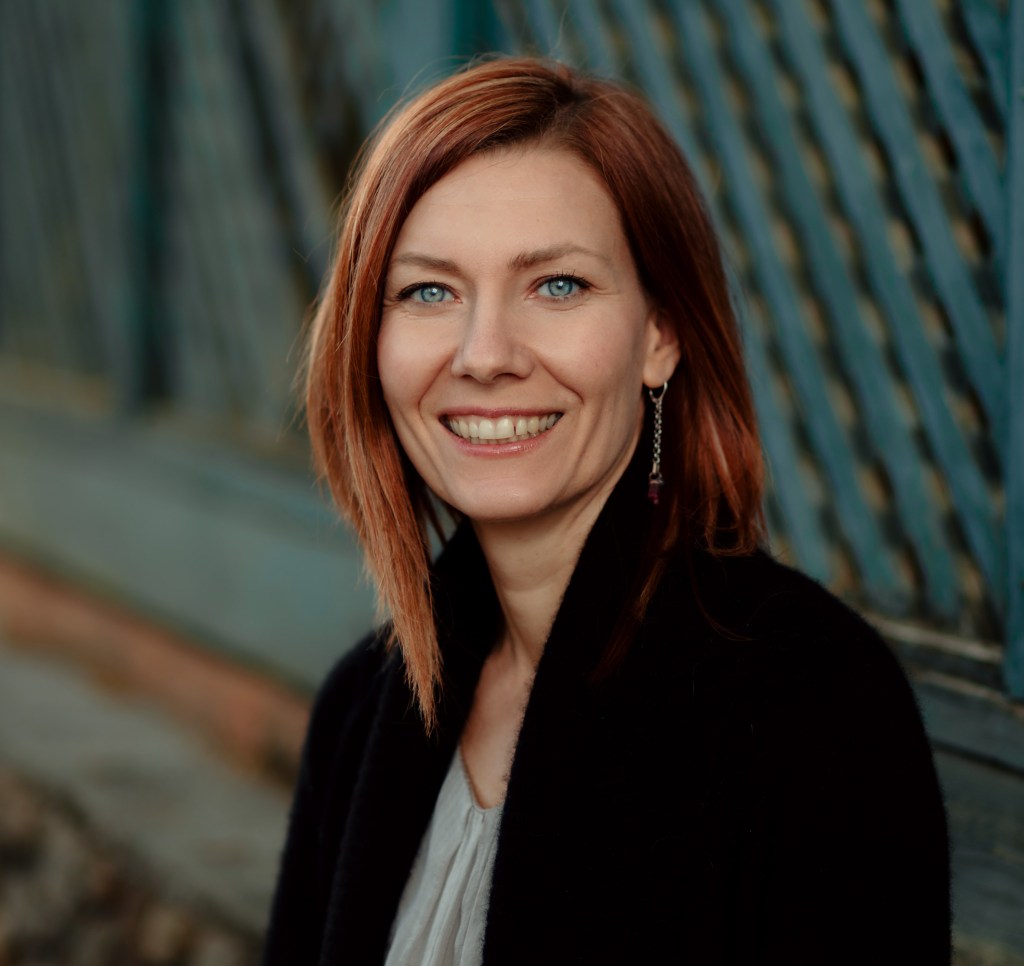
Stefanie Robel
Stefanie Robel is a tenured professor of neuroscience, research team builder, and leadership educator. Originally from Berlin, she earned her Ph.D. in Munich before moving to the United States, where she launched an independent research program that has secured more than $10 million in funding and developed a high-performing, resilient team over the last 10 years.
She has guided her laboratory through significant challenges—including the COVID-19 shutdown and a major institutional move—while maintaining productivity and cohesion. Several of her former trainees have since established successful research programs of their own.
Her interest in leadership began during her postdoctoral years, first as a way to strengthen her competitiveness and later as a means to create a sustainable career and lab culture. Stefanie is a multi-certified life coach and has integrated leadership development into her own academic journey, combining scientific excellence with personal fulfillment.
In 2019, she founded what is now GLIA-Leadership, bringing together coaching expertise and academic experience to support researchers in leading with clarity, building strong teams, and sustaining joy in their work. Her mission is to help change academic culture by showing that success does not need to come at the expense of personal well-being.
- GLIA Leadership Website https://www.glia-leadership.com/
- Stefanie’s website https://www.stefanierobel.com/
- LinkedIn Page https://www.linkedin.com/company/glia-leadership/
- Bluesky for GLIA https://bsky.app/profile/glia-leadership.bsky.social