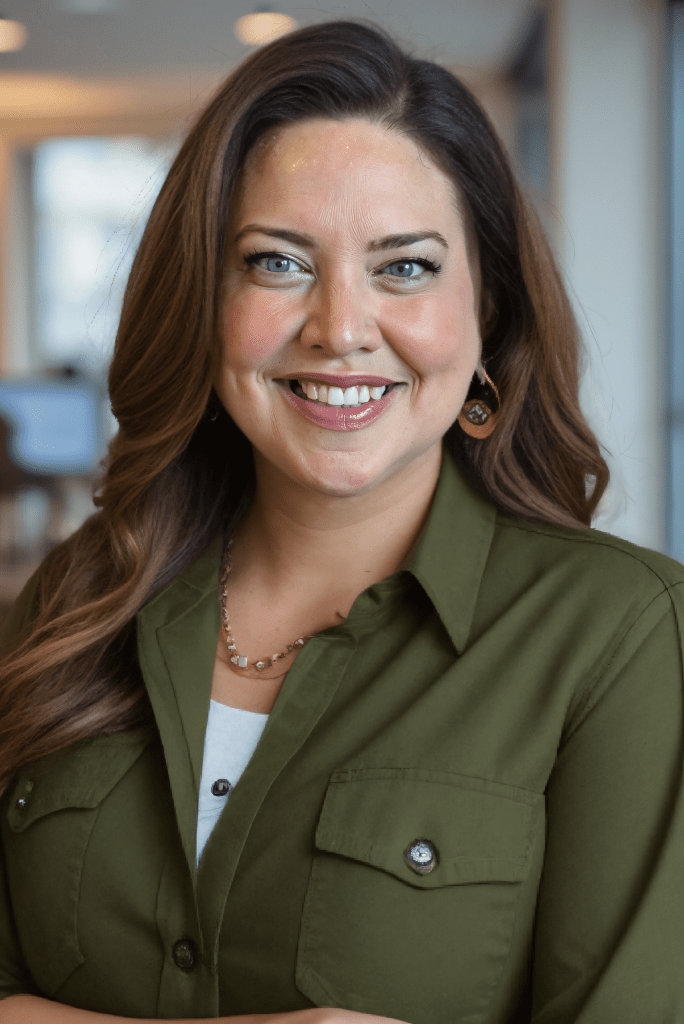
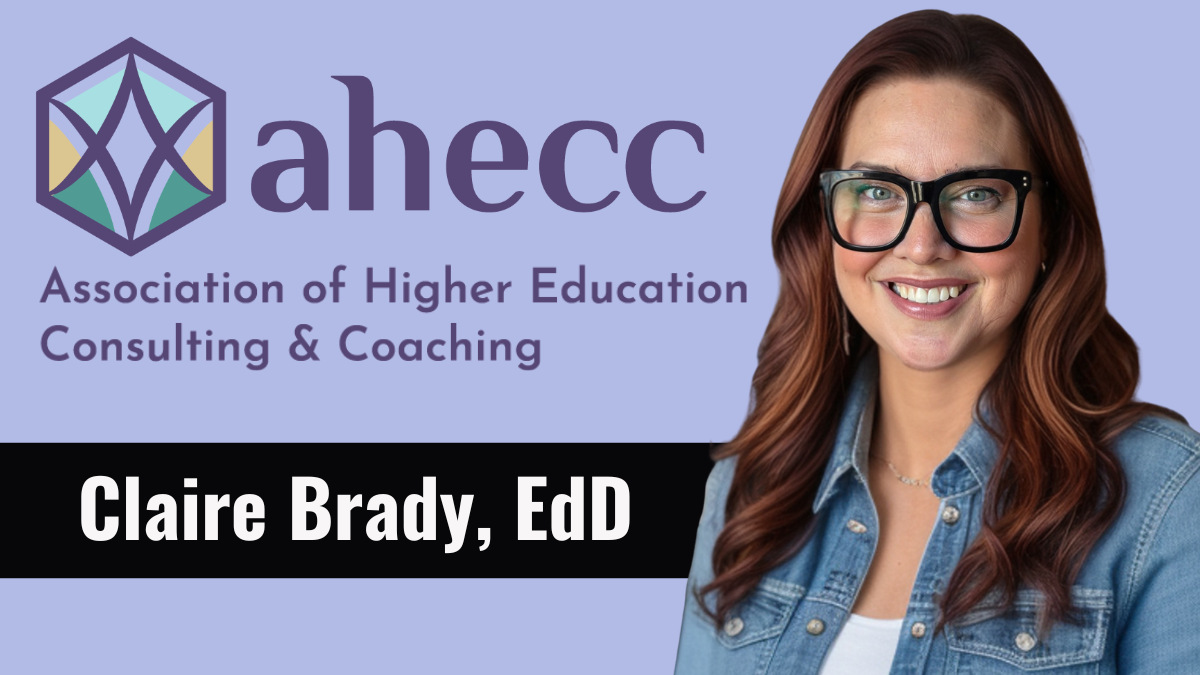
This year, I joined the Association for Higher Education Consultants and Coaches (AHECC). It’s been such a warm community, I wanted to share it with you too. Meet co-founder, Claire Brady.
AHECC is a place “to build a community where higher education consultants and coaches can thrive together…Whether you’re an independent practitioner, part of a consulting firm, or supporting client success behind the scenes, AHECC is here to connect you with peers who understand your work, your challenges, and your ambitions.”
Founder, Dr. Claire Brady talks about the Association of Higher Education Consultants and Coaches (AHECC) on this episode of The Social Academic podcast.
Quotes
Our Professional Home
“What we were missing was the place for us to call our professional home where the focus would actually be on building our businesses, creating community, [and] having advocacy at the national level.”
Shared Knowledge
“To have a board of directors—a group that you can just ask a bunch of questions to—in my opinion, is kind of priceless as a business owner and as a solopreneur in particular.”
Let’s Thrive Together
“AHECC is a place ‘to build a community where higher education consultants and coaches can thrive together… to connect you with peers who understand your work, your challenges, and your ambitions.’”
Connect with AHECC
Interview
Jennifer van Alstyne: Hi everyone. I am here with Dr. Claire Brady, and we’re going to be talking about AHECC, which is a new association that I’ve joined. And I’m really excited because this is finally a home, a space for higher education consulting, coaching, and that applies to so many people that I’ve met. Not just people who are doing it full-time like me. Claire, would you introduce yourself and tell us a little bit about AHECC?
Claire Brady: Sure. Well, hi everyone. Thrilled to be here. Jennifer knows this, but I’m a regular watcher of all that she puts out into the universe. I know, right? Fan girl moment. I play two roles. My full-time life is as a higher ed consultant and coach. I think that folks often do both. I happen to do both. My area of specialty is specifically in the area of AI integrations for colleges and universities. I’m on the road a lot doing that very, very hot work right now, as you can imagine. And the other wonderful hat that I wear is as one of the four co-founders of our new association, specifically built for higher ed coaches and consultants. As you said, it didn’t exist before and so we were the very first people to kind of plant our flag and say we all are members of many other professional associations and we will continue to be active and engaged members there.
But what we were missing was the place for us to call our professional home where the focus would actually be on building our businesses, creating community, having advocacy at the national level, and in some cases really bringing attention to the work that we do. Many of us work kind of quietly on campuses, off campuses and having a group that kind of brings attention to the really important work that we’re doing. And there are thousands of us out there doing this work. Like you said, some are full-time, some are part-time, some might have one client a year and some the two of us might be very busy and have many, many, many clients. But we launched last March and we’ve just been so thrilled, Jennifer, with the outreach. We’ve been thrilled with members like you that have come on board who maybe we didn’t know before. It’s been a really cool experience.
Jennifer: I feel like there were some instances in the last seven years when I was growing my business where some people were like, “Oh yeah, we all know each other.” All the consultants, all the coaches know each other. The world in higher ed was really small, was what I got from one Ivy League institution. And that’s true, but it’s also not true.
Yes, there are tight-knit communities and a lot of those are based around meeting places where people get to know each other, see each other on a regular basis. But there were also so many people like me who are solopreneurs or work at an agency that’s maybe not as involved in the big conferences that all of a sudden have opportunity to be part of community. There’s also a lot of faculty members who, maybe they’re the one higher education client per year because they’re working full-time as a faculty member or a researcher, but there’s many opportunities for your expertise to make a difference in higher education beyond your own campus. And so that’s really how I started to open my eyes to the world of higher education coaching and consulting, which I was already in. I didn’t even recognize it.
Subscribe to The Social Academic blog.
The form above subscribes you to new posts published on The Social Academic blog.
Want emails from Jennifer on building your online presence? Subscribe to her email list.
Looking for the podcast? Subscribe on Spotify.
Prefer to watch videos? Subscribe on YouTube.
Claire: It’s so funny you said that because our membership is exactly as diverse as you’re describing. We have folks that are doing real academic work, a lot of research and assessment work. We have folks doing enrollment management work, internationalizing higher ed work. We have folks that are working in exclusively coaching and specific groups, exclusively coaching new and mid-level professionals, exclusively coaching professionals moving from either faculty or administrative roles into academic leadership or administrative leadership roles. We have folks who only coach executives, chancellors, vice presidents, deans, et cetera. We also have folks who coach students, which is a whole area that to be very honest, wasn’t as aware about. There’s a whole group of academic advisors who’ve gone into their own consulting and coaching practices and our membership right now expands that entire breadth and depth of experience from, “I started last week and I have my first client, oh my gosh, please help.”
There’s a couple of those folks, all the way through kind of more early consulting, coaching career and all the way through 15 to 20 years as a full-time consultant or coach. And so even within this first year, we’ve seen that breadth and depth. We actually put a list together of everybody that we knew doing this work to do outreach to. And I have to tell you, they were not our first 20 members. Our first 20 members were probably about 15 people none of us knew. And they found us through LinkedIn. They found us because somebody posted, “Oh, Claire, who I know and trust is starting this association. Anybody interested?” And kind of put the word out? And that’s how we’re finding a lot of folks have found us is through LinkedIn, through kind of the network of network. But that just tells you how many coaches and consultants are out there. And if you’re not meeting them at that conference or they haven’t had to come and speak to their group or their class, then maybe they don’t even know that they have this huge network of people who could be helping them grow their business, amplify their services, but also just have community. This is lonely work.
Jennifer: I think about that. There’s probably people who are listening that are like, “I’m not a coach or a consultant,” but they are a faculty member. Maybe they’re alone, specialist in their field at their university. And so finding community is important to so many people. When you build something from the ground up, when you are envisioning and creating processes for and putting into implementation a new community, what are some of the things that maybe you knew, “This is the magic that I want to bring into AHECC?”
Claire: It’s a great question. Well, one of the things we said is we don’t want it to look like every other association out there. Those associations have, in some cases, decades of experience, but sometimes get stuck in some of those same old patterns of, “Well, this is the way it was done before.” We saw a real opportunity here as a brand new association forming in 2025 to not do everything the way that maybe we had first thought about. It originally came as a group of women at a conference and we had a discussion, “Do we become a group specifically for women identifying folks?” And we decided no, we wanted a bigger table than that. We said, “Do you have to have a very strict threshold of membership where you have to show a portfolio and show that you have contracts?” We said, “Well, no, because we want to bring people in at all phases.”
There are some basic membership requirements. You need to be a coach or a consultant working in higher education with at least one client. You need to at least be doing this work. And I think we’ve been contacted by folks who are interested five years from now in doing this work, and we’re going to bring some additional resources for them. However, contextually, it’ll be hard to follow along in some of the professional development because it really is based on the work that we do. As we put the association together, we really utilized the four of our networks because we really represent different aspects of coaching and consulting. We decided that we were not going to put the entire labor of the association onto volunteers. We decided that we absolutely want to have member-driven growth and initiatives, but it needs to not be basically in any kind of way of hindering their own business’s success.
And we see that with a lot of associations. In order to lead initiatives, it’s like a part-time job and we didn’t necessarily want that. And we wanted to scaffold opportunities, programming initiatives with member input. So if we came in and said, “Here’s the next two years of what we’re going to do,” we didn’t think that was necessarily really in service of the association. We came in with about nine months worth of product and then really started seriously talking to members. Every member fills out a very robust kind of intake. We do a lot of information gathering. We have, our first ever retreat is happening in Savannah in February, in-person event. We just did a major listening session with members about a week ago. We don’t want to design or do anything that assumes anything based on how Claire runs her business or how Josie or Carrie or Meghan run their business.
We need to hear from the members themselves. And I think that’s been a really nice refreshing piece. We’re about to start some initiatives where members are going to be leading some of our monthly meetups. I know you’ve joined me in helping to recruit members in some of our discover AHECC sessions. That’s the kind of feel we want to have as an association. Member led, member driven, but not to the point that initiatives fail based on one person perhaps having or that we’re in any way negatively impacting somebody’s actual core business. And then I think the last piece I would just say is that we acknowledge that we have a lot of knowledge and expertise in the membership. When possible, we want to bring that back to the membership. So as we look to our own future, our goal is to eventually have an executive director.
We would love for that to be a member of the membership, who wants to move into that type role. We know that we have so much talent within the group. We’ve started a programming series called Show and Tell where folks can kind of bring a product forward, get feedback, not quite Shark Tank style, but they can bring feedback from the membership. But then we also acknowledge that we need outside help. And so when we have our In Session, which is our quarterly professional development and other kind of programmatic series, we’re bringing in really renowned, well-respected trainers, business owners, consultants to help us. And that’s been really wonderful. Especially cause we don’t, we’re not a very rich association. So we’ve had to rely on some of our really close friendships and associations and say to folks, wouldn’t you love to come and spend several hours with our membership in exchange for a membership? Because these are folks that charge daily rates that are not the daily rates that I can charge quite yet in my life. It’s been really wonderful, Jennifer, to follow some of the pieces that have worked for other associations, but to just reject the stuff that feels like it’s not a good fit for us. Our core values are our core values. We put them out to the membership. We’re acknowledging how smart and capable our membership is and also acknowledging when we need to bring in outside help.
Subscribe to The Social Academic blog.
The form above subscribes you to new posts published on The Social Academic blog.
Want emails from Jennifer on building your online presence? Subscribe to her email list.
Looking for the podcast? Subscribe on Spotify.
Prefer to watch videos? Subscribe on YouTube.
Jennifer: I feel like there are people who really don’t understand the role of coaching and consulting and how it can support higher education. And I feel like that’s something that’s come up in the news. It’s an argument that comes up against use of university budgets. And so I’m curious about the impact that you’ve seen on campuses from coaching and consulting.
Claire: It’s tremendous. And every year one of the big higher ed newspapers comes out with a terrible article about consultants and coaches. Then we have to raise our hands and say, hold on. Like any industry, there’s good and bad actors. But what I have found is I go onto a campus, I bring a whole suite of expertise, 26 years working in higher ed. I understand how things work, but I can also be a mirror to the institution about some of their own kind of functional areas and dysfunctional areas. Oftentimes institutions need an external person to kind of come in and build momentum. And what I find is especially academic and administrative leadership, their bandwidth right now, it’s very thin. They’ve had a horrible couple of years. We all have in higher ed, and they’re just looking sometimes for a thought partner. They’re looking for somebody to build momentum for an initiative that they know is essential at their institution, but they have 27 other things that are also essential they need to lead.
And so what I’ve been able to see from my own experience and then listening to our AHECC membership is that we’re able to give momentum. We’re often able to give attention and intensity to a problem. We bring a whole network. When I go to a campus, I just spent several days at Florida State University as their executive in residence. I don’t just go to Florida State as Claire Brady. I go there with my hundred clients I’ve had this year. And so when someone says to me, I’m working in career services and I’m really struggling with X, Y, and Z, I can say, “Great, you need to call so-and-so at Norfolk State and you need to call so-and-so at Holy Cross because they’re doing similar work and they’re having a similar,” either success or a similar frustration. And so we bring not only the knowledge in our head, but this network of clients and experiences.
And then to be really honest, we can sometimes say things that institutional leaders can’t say. And it’s interesting. I know they really want to say it, right. I want to talk about coaching for a second if I can, Jennifer, because I don’t know if I’m predominantly a consultant. I do executive coaching, but I have to tell you, the explosion lately of interest in coaching and how valuable and important it is for professionals at all levels to have an unbiased, not in their chain of command champion, is major. And like I said, the bandwidth being so thin and so small that supervisors are stretched very thin too and they can’t always have the type of mentoring supporting champion relationship with every single employee. And I would argue that some folks are looking for something different from a coach. It could be that they’re from a similar identity group.
It could be that they’ve had a similar trajectory. I just think about the number of folks I talk to every week who say to me, an executive coach at whatever level, in whatever way was the difference maker for me, either in making the decision to stay, in making the decision to do something else, in making the decision to put my name forward for that dean position or assistant dean position. Or to say, “You know what? You’re right. I don’t want a chair. I thought I did, but I really don’t. And I want to be the best darn chair of this committee and the best darn faculty member in this department than I can ever be. And so for me, I just think that coaching has kind of slowly crept in, but it has become so important. I only take five coaching clients at a time because it is such an intense experience and I give my whole self, and I hope that they’re giving their whole selves too.
My goal is to put myself out of work. My goal is to get them to a place where they feel like they just need a tune-up every now and again, and then I can bring a new person on board. I really do think that they’re doing such important work. And in AHECC in particular, we really have a split of about 50/50 of consultants and coaches with a little, then overlap there, folks who do both like me. But it’s an area that I think our field is desperately in need of and then has provided in some cases, whether it was paid for by an EAP program, whether it was paid for by a departmental budget or whether the person has made the decision to invest their own dollars, in many cases has salvaged and saved countless higher ed folks from leaving our field. And I think that’s kind of an unsaid thing that is important that we highlight.
Jennifer: I feel like that’s really important that we highlight because there’s so many stories out there of lived experiences where people are being forced out. But the people who are choosing to leave who might otherwise stay, if the circumstances and their own understanding of what they’re doing and why they’re doing it, that’s so meaningful. And we can have more agency in making those-
Claire: Absolutely.
Jennifer: Decisions.
Claire: And I just feel like it’s a sounding board, and sometimes that person might say “Things aren’t that bad, things aren’t that bad.” But here’s a way that you could think about navigating it. Most of my coaching session is listening.
Most of my coaching session is listening and observing and pointing out and saying, it sounds like you actually don’t want to leave. It sounds like your partner wants to stay in such and such town. It sounds like your kids are thriving. And most of my coaching is listening, which is kind of funny to say out loud, but it’s also pointing out patterns and trends. And sometimes we get stuck in our own heads and we start a narrative, and I always say, always said this when I worked on campus, “In the absence of information, people make stuff up.” And it’s not always positive to the institution or the supervisor. And so sometimes it’s having a coach who helps you navigate and ask the right questions.
Subscribe to The Social Academic blog.
The form above subscribes you to new posts published on The Social Academic blog.
Want emails from Jennifer on building your online presence? Subscribe to her email list.
Looking for the podcast? Subscribe on Spotify.
Prefer to watch videos? Subscribe on YouTube.
Jennifer: I feel like that is something that we have a difficult time creating space for ourselves, but we also have a difficult time creating the comfortable space to disagree, to criticize, to have ideas, to imagine when we’re the direct supervisor or leader. There’s spaces that can be better facilitated because of third party that does not have that connection, can be the guide for that conversation and help everyone feel like their voice can be heard. Tell me a little bit more about your consulting, because I feel like there’s people on this call that are like, but what does Claire do?
Claire: I talk a lot. No, so my area of specialty is predominantly AI. I do everything from AI keynotes, helping people understand where we are, what’s currently happening. I separate fact from science fiction. I help folks to really kind of see what’s around the corner. I’m not a techie person. I’m actually a higher ed student affairs person. I speak from that lens. And then I do everything else. I do all types of very specialized training, so if that be AI for administrative effectiveness, governance policy. I just did a wonderful session last week around accessibility and the ways that we can speak to our vendors about how AI tools cannot just have AI bolted on to the tools that we currently have, but how do we work with our vendors to make sure that at the very entry point, everything is kind of working with minimal universal design standards and then hopefully much higher than that.
And then I do really complicated AI integration, vetting products, helping institutions make the right choices. And I’d say that’s the majority of my business. I’m on 30 physical campuses a year. I work with 50ish institutions a year. I do some virtual work. I do some external consulting for a couple of clients. Kind of like what we were talking about earlier, that once they figure out that you’re a good agent and a good egg, they often ask you to do other things. I’ll be on a campus and a college president will say, “That was really good. You really got people thinking about that differently, Claire, and they’ve been stuck for a few months. Do you do strategic planning? Do you do external review for Department of Education grants? Do you work with mentoring cabinet?” And I do all those things, but my biggest part of my business is really focused on AI.
I might go to a campus for two days and I might spend, do five or six different sessions on different topics with different audiences. I might see hundreds or thousands of people across a couple of days. I’ll spend some private time with the board or with the president and the cabinet. I’ll often work with the care team or the behavioral intervention team who have a different set of needs. I might work with the clinical staff, so the medical team, the counselors, the wellness folks. What I don’t do as much, and I know this is your love. I don’t do as much faculty work anymore. I did it for a very long time. I often do it with academic leadership more than anything, but there are some really wonderful people out in the world who exclusively work with faculty, and I actually recommend them more than me cause I think they’re better than me. They’re better at getting into the nitty gritty stuff around instructional design, around pedagogy. Even though I was faculty for 10 years, that’s not my specialty. And there’s just people like my friend, Justin Greathouse and other folks that just do it better than me. And so I get a call from an institution saying, will you come and meet with our math department or our humanities department? And I’ll say, thank you, but no thank you. You should call my friend.
And then I do some other work with other groups, but that’s really the crux of my work, is spending time on campuses, doing a lot of remote work. But once an institution hires me for something, they often find something. I’m looking at you Alamo Colleges and other places that are always so lovely and are like, “Claire, please come back and do this other thing for us.” And that’s kind of an interesting place to be where you are a trusted third party who they know can lead sensitive or hot topics, things that are challenging. I was at the College of Holy Cross a couple of weeks ago, and we did a dialogue dinner with students about AI, and it was amazing experience, but students are in a vastly different place than our faculty and staff are. And that became evident at dinner. But I felt very trusted that they let me come into this very intimate experience that they do once a month with students and lead a conversation around AI with students who feel very differently in some cases than some of us who are a little older.
Jennifer: Wait, can I ask what some of the-
Claire: Sure! The students use words like, well, one of the students said, “I don’t use AI, but my roommate does. We were like, “Sure.” Many of the students use really negative terminology, like ashamed, scared, confused because imagine going into one class and it’s like, “Use it as much as you want. I’m great with it.” And they go to the next class, “Don’t use it or I’ll send you to the conduct office.” The third class might say, “You could only use it in these following ways.” And they have five classes a semester, and then as soon as they kind of master that, they go to the next semester. And it’s completely different ballgame. They’re getting mixed messages about the tools they are allowed to use. Some institutions have tools they allow that have safety precautions built in and some don’t. Some have a very weak policy as it relates to simply being in the academic sense.
But then you go to your job on campus and it could be a whole different set of expectations. And then you go to your job off campus and your employer is saying, “Use it. Use it for everything. I love it. Sign me up.” And so the level of confusion from students, we were at a table and the very first question was, “How do you use AI and how do you feel about it?” And our table was half faculty and staff and half students. And the students were like,” Faculty and staff, you go first, you go first.” A faculty member spoke about it really beautifully. I don’t like these things about it, but I love these things about it and this is how I use it. But the whole time he was speaking, he was smiling, and then it got to me and I said, “I love it.
I use it for all these things. It’s made my life so much better in the following ways.” Then we got to the dean of students and he said, “Just today, just today, I got a very heated email from a parent, and it helped me to write a really rational response back to the person that was very action-oriented, very empathetic, and I didn’t fall for any of my kind of, whatever.” And he’s smiling the whole time he’s talking. Then we get to the students and it’s ashamed, scared, sad, lonely. And then at the very end of the dinner, we said to the students, what surprised you the most? And they said, how happy and how much you like AI. Isn’t that fascinating?
Jennifer: That is fascinating, and absolutely not what I would have predicted. I mean, I don’t teach anymore. I am not on a university campus. I am 99% of the time I’m working, I’m here in my office or out in the garden. But it makes me think that the conversations that are happening around AI have been really small rooms.
Claire: And localized, and they haven’t been broad enough. I’ll ask the question, “Is it in your new student orientation?” They’re like, “Well, not yet because it’s so specific to the class.” But AI literacy is not specific to any class. If you’re going to engage with one of these tools, you should have knowledge about how it wants to please you, how it rarely pushes back, how it’s based on incomplete information, how it’s oftentimes biased. That’s kind of information beyond the headlines. And then once they know that, what do you do once you start engaging with an AI tool to mitigate some of those things? And so I think we’re going to see a massive transformation in higher ed. I hope to be a part of it. Please call me, folks. But it will only happen when we pull students in. They’re so lost and confused. Now again, my example was one institution, one table of students, but it is not unlike what I’m hearing from students in other places.
Subscribe to The Social Academic blog.
The form above subscribes you to new posts published on The Social Academic blog.
Want emails from Jennifer on building your online presence? Subscribe to her email list.
Looking for the podcast? Subscribe on Spotify.
Prefer to watch videos? Subscribe on YouTube.
Jennifer: I feel like that youth action participatory research, which is a term I’ve learned from my clients, is something that we don’t always consider in making large scale decisions for companies, for organizations. And when the things that we’re talking about are not only affecting the faculty, they’re affecting the staff, they’re affecting vendors, they’re affecting the students, they’re affecting the parents. These conversations have become more important than ever. I remember when AI was first becoming a thing that at the leadership level, people had to make decisions about. One of my clients was an academic dean who was tasked by the president of her university to start doing this research. And she was attending webinars, and she was starting to really understand the scope of what was possible and what kinds of decisions might have to be made. And it was right at the beginning where it felt like there was no support.
I’m so glad that I met you. I met so many beautiful people in AHECC in the Association of Higher Education Consulting and Coaching, where we can refer to each other. We can say, “Oh, I know this person who can help you and have that be from someone you trust.” I feel like I am not someone who wants to grow my business in size. I don’t want employees. I have some amazing partners that I love teaming up with, but overall, when I’m not the best fit for you, I’m definitely going to refer you to a person that I know and trust and that’s really meaningful to me. I love being an AHECC for the community, but I also love that I get to meet so many cool people like you.
Claire: Well, it’s so funny. My attorney, my professional attorney here in Orlando wrote me and said, “I have a client who has a student who’s not quite being adopted by grandparents, but guardianship is happening. She’s doing her FAFSA, she’s totally confused. Can you help?” Well, that’s not my area of specialty. I feel weird calling my former financial aid colleagues and saying, “Can you help this student? I put it out on AHECC and it turns out there are financial aid coaches. This is what they do, with families and very reasonably priced. And so I put a call out in our private network that we have for AHECC, and I said, “Does anybody know?” And somebody had just joined three days before, and she said, “Here are three people. I highly recommend them. Here’s what I know about them.” Not just a blanket whatever. And I would prioritize them in this order.
And so I reached out to the person, do you know they asked to have virtual coffee with me? Had virtual coffee, delightful human. And they have since gone on to help my attorney and this family and have had a wonderful experience. And again, that would never have happened. I probably would’ve said to them, “No, sorry, I don’t know anybody.” There are actually people who do this work. And we’ve seen it happen. We were on a Discover AHECC call, which is our kind of prospective member session we do once a month, and a vendor who wants to do some partnership with AHECC came on, stayed throughout, and then afterwards said, “I feel so sorry. I didn’t mean to spend the whole time, but I was really interested by the number of people that were here and the conversations that were happening. We’re a UK based vendor, tech vendor and we’re trying to break into the US market.
And he said, “And Claire won’t work with us,” which I won’t work. I won’t take any money from tech vendors cause then my clients won’t ever trust me. And he was joking. He said, “Claire won’t work with us, so we don’t know what to do.” Well, my copilot in that session was a member, his name is DJ. He is incredibly talented and DJ said, “Well, I’ve got some ideas.” And just started giving us a whole bunch of really helpful ideas to the vendor. And at the end, the vendor said, “Would you be willing to do some work with us?” And DJ was like, “Absolutely!” They’re now working together. The same thing happened. One of our founders, Meghan, found an RFP, but she didn’t have all of the expertise to fill out the team for the RFP, request for proposal. And so she put it out to AHECC members, Laura, who has the expertise, said, “Absolutely.”
Or maybe it was the other way around. Laura asked and Meghan responded, and now they’ve had two successful RFPs and pretty major projects, and we’re less than a year old. We just keep pointing to those examples of where if we don’t even know we’re out there, we can’t make the referral and we wouldn’t just refer anybody, but we’re getting to know each other through this association, through programming. Even though we’re all virtual, I feel like we’re getting to know each other really well. I’m actually kind of not looking forward to us growing really big. I know, I can’t believe I’m saying that out loud because I know everybody now, and it feels very like we’re in a clubhouse. I know eventually it will grow much bigger and it’ll be a very different feel. Still good. But it’s those kinds of kind of moments where you can leverage the membership and say, “Hey, I really want to do this.” We’re looking at building some new resources for the next year, and we’re going to be leveraging membership to really help us inform those. And so I’m excited for year two. I can’t believe we’re about to have our first anniversary.
Subscribe to The Social Academic blog.
The form above subscribes you to new posts published on The Social Academic blog.
Want emails from Jennifer on building your online presence? Subscribe to her email list.
Looking for the podcast? Subscribe on Spotify.
Prefer to watch videos? Subscribe on YouTube.
Jennifer: I am very excited too. Being a founding member was not something that I was looking to do. I remember when I got the first email from Josie Ahlquist about AHECC, I was like, “Oh, this sounds really cool. I don’t have the capacity to sign up.” I just don’t have room in my life for more connection and more meeting. Then I came to a prospective members meeting. Cause I was like-
Claire: It was just the two of us. Do you remember? It was the greatest conversation.
Jennifer: We had so much fun. I felt like I knew what AHECC was about and that I wanted to be a part of it, and I was going to make room in my calendar for it. Not only have I been able to fit AHECC in, but I’ve been delighted to, and I feel like the return on my investment paid off month one.
Claire: Really!?
Jennifer: Yeah, I’ve never felt like I questioned my decision. But I do have a question for you, which is, who should come to a prospective members meeting? Who should take this opportunity to learn more about AHECC?
Claire: On our website, ahecc.org, we have an events page. We have a join page. If you are somebody who is either currently doing consulting or coaching in the higher ed space, it doesn’t have to exclusively be in higher ed. We do have some folks that work a little bit in nonprofit or with higher ed adjacencies, they work with Lumina or they work with Gates [Foundation] or something. And if you are somebody working in higher ed or higher ed consulting and coaching who has one client, or perhaps you’re thinking about very soon launching into either part-time or full-time work at any of those areas, I would say in the next year. I don’t think you’d want to go much further out from there. I would definitely say come to a Discover AHECC session. We do them monthly. They are set up to replicate what our monthly meetups look like and feel like on purpose because trying to not show something that doesn’t exist once you’re a member, obviously. Within that session, we’ll share some basic information.
I always have a copilot who’s one of our current members, who gets to share their experience. They come from all different parts of consulting and coaching, as I’ve shared. And we’ll do a little preview of what our private members network looks like, because I think that’s hard to imagine if you haven’t necessarily been in that space. We do everything there from programming to announcements to what’s your favorite piece of luggage? I’m very curious to see how that text chain is going to work out. We share what technologies we’re using and who’s your accountant? And I’m doing a proposal and I’d like somebody to give me feedback. Who would be willing to look at this? All types of things happen in that private network. And so I give a little preview of that, get some questions answered. But I think the two things we get asked the most: Is there a place for me,
will I belong here, and secondly, will I have a return on my investment? And I can answer those questions in the affirmative, but to hear from a member who says something like what you just said, which just stopped my heart, I was so excited because this is what we dreamed of. We dreamed of putting together an association where you can’t imagine now not having AHECC in your back pocket. You can’t imagine now not logging into the app and asking the burning question. You’re going to get five responses. You can’t imagine missing it. When I’m flying and I have to miss something, I’m kind of really bummed and I want to watch the recording as soon as possible. So that’s-
Jennifer: You’re pretty cute. You’re sometimes on the call and you’re like, “Oh, I am on my honeymoon right now.”
Claire: I’m in a hotel and people are walking by me or I’m literally boarding the plane. Yeah, I’m the traveling of the founders more so than, well, the traveling for work. Meghan is the world traveler. She’ll be like, “I’m in Prague,” or “I’m in Tulum right now.” I know, she’s great. It’s really interesting because I feel like I can’t imagine not having this network now or what I ever did before it. And I think that if folks are interested in joining and they see that investment, I think part of it is you invest the time and the energy to do things. But I also feel like for me, if I were a new or an emerging kind of business owner, I think it would propel my business significantly months or maybe a year in having access to not only all the recorded resources that exist in our private network, but just the kind of board of directors that you can call upon to say, “I have a strange thing happening.
Whenever I work in California, they take 7% more tax than everywhere else does.” And then someone like me would raise their hand and be like, “That’s a thing, and that’s going to keep happening, and you should build your prices accordingly.” Or every time I work in Texas, they require me to have more professional liability insurance than this other state that I work in. It’s interesting questions like that are the nitty gritty, but they make a big difference in your business. And to have a board of directors, a group that you can just ask a bunch of questions to in my opinion, is kind of priceless as a business owner and as a solopreneur in particular.
Subscribe to The Social Academic blog.
The form above subscribes you to new posts published on The Social Academic blog.
Want emails from Jennifer on building your online presence? Subscribe to her email list.
Looking for the podcast? Subscribe on Spotify.
Prefer to watch videos? Subscribe on YouTube.
Jennifer: I have one last thing that I want to share for faculty members. If you’re listening to this and you’re like, okay, I’m not a coach or a consultant. I’m not working with the people that this association would be a good fit for me, but I really like what Claire said about creating your own space, creating your own association. If you are someone who’s looking to create community, just know that is possible for you. It doesn’t have to happen now. It doesn’t happen have to happen in 2026. But if this is something that you want, if you want to bring together people with your same interest or expertise or to talk about a topic that you care about, that is possible for you. And Claire has shown how intentional and thoughtful and meaningful it can be, not only for you as the person who’s starting to create it, but for the people that you will attract by creating that space in the first place.
Claire: Also, can I just throw in there Jennifer, I think many people should have LLCs. They cost so little to form, and it’s such a benefit to you when you’re going to do your taxes, but a lot of us are giving away free labor. And I think that, I have a folder in my email called Service to the Field, and absolutely, I just flew and did a keynote for a major association. They paid me nothing. I made that intentional decision, but I also think there’s someone, so many times when people said to me, “We want to pay you a stipend” or “We want to pay you something,” and I’d be like, “Ugh, it’s too much, too much paperwork.” Just don’t pay me, buy me a rubber chicken dinner or something. And I just think that there’s an opportunity here that there’s a lot of folks that you could be paid for your labor, you should be paid for your labor, but there’s a lot of nonprofits and for profit organizations that need your expertise and your voice. And so if you’re doing a lot of that and giving it away, you may want to consider starting an LLC, small as it may. I think I did $500 the first year that I had an LLC.
Jennifer: Were you still a faculty member then?
Claire: Yeah. Yeah. It made sense because I also had a lot of rules in my department about what I could and could not get paid for, but as soon as I wasn’t a faculty member anymore, the same people kept calling me and asking me to help them with X, Y, and Z, and many times wanted to pay me for my labor, rightly so, and I didn’t always have a mechanism to do it. In a way, you’re a consultant if you get that stipend to do that work.
Jennifer: This has been such a warm conversation, and I hope everyone goes and checks out AHECC. Is there anything you want to chat about before we wrap up today, Claire?
Claire: I’m so amazed at the clients that you have, Jennifer, that are in the faculty space. I do miss that I was 10 years in that space, but if you’re doing interesting work with AI or any type of work with AI that you think would be helpful to me as I travel around the country, if you want to highlight something, I’m currently finishing a book to be published in the spring and you want to share any information that you have with me about the things that you’re experiencing, I hope that you’ll go to drclairebrady.com or find me on LinkedIn. I’m a LinkedIn lover. I love it. And just let me know what I should be hearing about what’s happening in your space. I hear a lot from folks in the student affairs enrollment management space, but I’d love to hear from faculty and academic leaders around what you’re seeing and hearing and what you need as I’m about to release a book and go on a tour and do all the things.
Jennifer: What is your book called?
Claire: I can’t share that here just yet because my publisher is fighting with me currently over it. I’m sure that it’s not a surprise to anybody on this call that my publisher, very nice group, and I are currently debating a couple of words, but it really is focused on human led, responsible AI.
Jennifer: Amazing. Well, I’m definitely going to put that in the LinkedIn post because I know a lot of faculty members who have strong opinions in both directions.
Claire: I want to hear it all.
Jennifer: I love it. Okay.
Claire: Dissent is data. Dissent is data. Fear is data as well.
Jennifer: Yeah. Ooh, that’s important. And I’m so glad you shared that story about the students and what they’re experiencing too.
Claire: Thanks for asking. It’s the untalked about, unspoken part of this AI piece that I think is so important for getting students to the table.
Jennifer: Well, I’m so glad that I had you on my show to talk about AI and to talk about AHECC, and I’m so happy that we met! Everyone, go connect with Claire on LinkedIn. And Claire, thank you so much for coming on.
Claire: And if folks have questions or want to come to a session, I hope that they will now or in the future at any point. AHECC is just going to keep thriving and growing. And we’ll be there for whenever you’re ready for us.
AHEEC.org, A-H-E-C-C, give a heck .org. I know, it’s an inside joke. We love it.
Jennifer: Thank you so much, Claire. Thank you everyone!
Subscribe to The Social Academic blog.
The form above subscribes you to new posts published on The Social Academic blog.
Want emails from Jennifer on building your online presence? Subscribe to her email list.
Looking for the podcast? Subscribe on Spotify.
Prefer to watch videos? Subscribe on YouTube.
Bio
Dr. Claire Brady is a successful higher education consultant and nationally recognized leader in artificial intelligence, organizational strategy, and student success. As President of Glass Half Full Consulting, she helps colleges and universities harness the power of AI to strengthen leadership, streamline operations, and create more human-centered institutions.
Claire is also one of four co-founders of the Association for Higher Education Consulting and Coaching (AHECC)—the only professional association dedicated to higher education consultants and coaches. AHECC was founded with one powerful idea: to build a community where consultants and coaches can thrive together. Through this work, Claire helps shape a national network of professionals committed to connection, collaboration, and excellence in serving higher education.
With over 25 years of experience as a vice president, faculty member, and executive leader, Claire has guided institutions through cultural change and digital transformation with clarity, care, and a bias toward action. Her national report, The Transformative Potential of AI: Recommendations for Student Affairs Leaders (NASPA & Strada Education Foundation), and her upcoming book on responsible AI in higher ed reflect her passion for aligning technology with mission and meaning. Claire lives in Orlando with her husband, Ben, and their son.