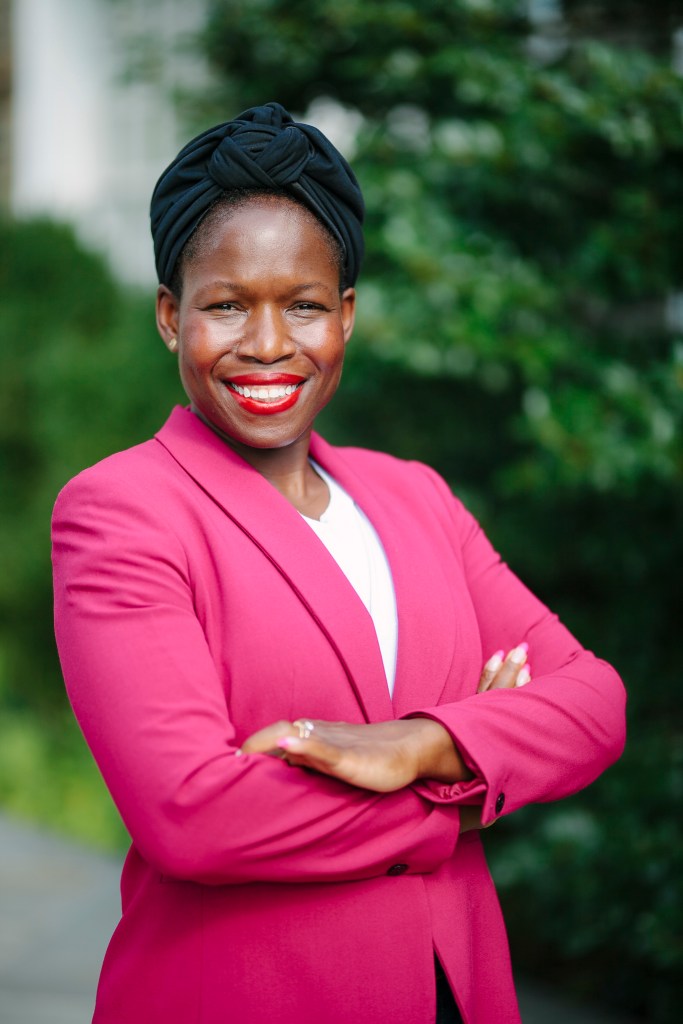
Dr. Tiffany L. Green is a professor and an expert at helping academics and scientists communicate your big ideas with clarity and impact. Scientific storytelling, getting good at giving job talks and presentations, is something you can build your capacity for as a professor. We talk about Tiffany’s journey as a competitive speaker and TEDx coach. And, how she can help academics like you get better at sharing what you care about most.
Season 8, Episode 9 of The Social Academic Podcast was broadcast live on Thursday, May 21. I thought this would be a great episode to share with you because so much of the intention we put into communicating who we are and what we care about in person can support your online presence too. If you’re on the academic job market this year, I’m cheering you on! Thank you.
Questions answered in this episode
- How early should you start preparing?
- What is an academic job talk?
- What are the mistakes faculty tend to make in their job talks?
- What can scientific storytelling or sharing the story of your research do for your job talk?
Resources
A full text transcript of this interview is below. Thank you.
Subscribe to The Social Academic blog.
The form above subscribes you to new posts published on The Social Academic blog.
Want emails from Jennifer on building your online presence? Subscribe to her email list.
Looking for the podcast? Subscribe on Spotify.
Prefer to watch videos? Subscribe on YouTube.
Quotes
Risk and the Academic Job Market
“I realized pretty early on is that a job talk is also about risk mitigation… they want to make pretty dang sure that the person that they’re bringing in is going to be able to hit the ground running and fulfill the requirements for promotion and tenure.”
Answering Questions
“What question are you scared of people asking? Put that right in the middle of your job talk… You’re saying, ‘Oh, I’m not scared of you asking me questions. I’m putting the thing that is allegedly the most vulnerable thing in front and center.’”
Scientific Storytelling
“That’s, I think, the power of scientific storytelling… I’m not asking you to tell me what you eat for breakfast. They don’t care about that, but they do care about how you arrive at questions. They do care about what you are adding to the literature and to society.”
Interview
Jennifer van Alstyne: Hi there. I’m Jennifer van Alstyne and this is The Social Academic Podcast. I’m very excited for today’s talk because I have a special guest here today, Dr. Tiffany L. Green. We’re actually going to be talking about academic job talks. It’s a little bit more focused, but I think this is so important because the intention, the thought, the capacity that you build to communicate about yourself can really make a diference for how you show up in person but also for your online presence too. Tiffany, would you mind introducing yourself for people?
Tiffany L. Green, PhD: Hi, I’m Tiffany Green, she/her. I am currently in my day job, an Associate Professor of Obstetrics and Gynecology and Population Health Sciences at UW [University of Wisconsin]-Madison. I am an economist by training and a population health scientist by practice. My work really focuses on the causes and consequences of racial inequities in reproductive health because I believe when people have control and autonomy over their bodies that everything in society absolutely gets better.
Jennifer: I love that. What a strong introduction. I feel like sometimes when I ask people this question, they are not sure exactly what to focus on, but as the storytelling professor, you had something ready to go. I love that. You’re someone who also along with your academic career has created a business where you support people to better tell their story and shape their academic job talks and also public speaking. Tell me a little bit about what prompted this journey for you.
Tiffany: Yeah. It’s been sort of a long journey as I was explaining to someone yesterday. I actually did talks when I was younger. I grew up in Southwest Philadelphia, like the Fresh Prince [of Bel Air]. West Philadelphia, born and raised. And I did oratorical talks. I did all kinds of talks, but I really started to lean into public speaking when I met my now husband. He was in this organization called Toastmasters International. And I’m like, “What’s that? You make toast?” And like some people or many people I got sucked in and within a month I was in a leadership position in the district. I was giving all kinds of speeches. And as you can see from some of my writing, I actually have a little bit of a bone to pick with Toastmasters when it comes to scholarly speaking. But it was such an essential way that I learned not only to formulate and scaffold my own talks.
My mom, I come from a very blunt family and my mom says, “Your talks used to be so disorganized and now they’re clearer, they’re together.” Yes.
Jennifer: Feedback from mom.
Tiffany: But I also fell in love with coaching people. There’s a speech contest for international speech, which I competed in and also a contest to compete with evaluation. How well can you support and coach people with talks? And I realized I love that part way more than competing for just my own speeches.
You always get stuff out of me that I never intended to tell, but here it is. We’re talking about that part. But anyway, during that time I also became a TEDx coach. I coached for three rounds of TEDx and that was really informative for me because academics, we love to squeeze 5011 things as the number goes into our talks. And I know you know this because you’re trying to help people on their website and they give you 30 things to put on there and you’re like, “What is the point?” And so from TEDx I learned the importance of having one idea worth sharing. And it was also very important and a contrast from academia or people’s perceptions of Toastmasters rather. People needed to have one clear idea worth sharing. It wasn’t about whether they were amazing speakers. It was about them having an idea worth sharing.
And that’s what I was kind of missing with Toastmasters to be honest with you.
Jennifer: I like that. What does that mean for the audience? When things are more organized, when they’re more scaffolded, when it’s one idea, what does that mean for the people who are listening to the talk?
Tiffany: It means they have one thing to focus on. If you’re trying to, particularly in age when our attention spans are down, and IMBR [Imma be real] and our attention spans are down, people need something to hold onto. People need something to come back to. And so that’s when I started saying, “Huh, this is going to be really important.” Then I somehow, because I was on Facebook yet again, I don’t recommend being on social media as much as I have been and are and am rather. Somebody put a note in a group I was in, Dr. Taja-Nia Henderson, who at the time was the Dean of Graduate Studies at Rutgers-Newark. She said, “I need somebody who’s been a TEDx coach and a Toastmaster.” And I was like, “Me, me.” I ended up since then coaching students at Rutgers-Newark for three minute thesis.
But during all of this, I’m giving you sort of the, I’m going to land this plane, I promise. But during this time I realized that the place where I was and no, not to it at all was not the place for me. And the thing that I had to do was deliver on a job talk and part of that preparation for the job talk was bringing everything that I had learned from Toastmasters, from TEDx and the evolution of my work to understand what the one idea we’re sharing was. And my one key idea was that in this position it was a reproductive equity cluster hire. If we want to solve these racial inequities and reproductive health, we have to care about at the time women, and my thinking has definitely evolved since then, care about people capable of pregnancy. You have to care. You have to care about them whether they’re pregnant or not.
And so I went in. I went into that talk, Jennifer. I was secretly pregnant. I was sick as a dog and I said to my child. I was like, “Look, we have to get it together because we all have to eat, friend.” We all got to eat.
Jennifer: I love this story.
Tiffany: And I told this story that was absolute true. The same techniques that I teach people now. It’s like I was up on Facebook late at night and I found the story of this young black woman who had these big, wonderful dreams. She wanted to own her own hair salon and then she got pregnant with twins and she got sicker and sicker and sicker and those babies were born very early. A few days after she gave birth, she went back into the hospital and kept declining and she died.
What I said, cause I was in a room where I had to give two job talks at the same time. To, they’re an economist like me, political scientists in the policy school, then there are the public health people that don’t trust us as far as they can throw us, sometimes for good reason. Look, I had to bring them all together and I said, “Look, I care about this as an economist. I understand the impacts of black babies being too born too light too soon and ready to die before their first year of life compared to other groups. I understand that about black birthing people. And so I understand the economic costs, I understand the policy implications, but as a human, this is why I do that work.” And I did that before I hit people with the stats and the other things and I’m here.
I have to say, that was a talk, but it was that process of preparation. All of those things led me to understand that a really good job talk can change everything for you. Now I had the receipts to back it up, but having that and teaching people how to do that was something that really motivates me because I think people doing good science deserve to have a stage.
Jennifer: I love that.
Tiffany: That was a little long-winded.
Jennifer: No, no, no. It was perfect. And I think for everyone listening hearing your journey is really impactful and it helps people understand and put themselves in that position of, “Oh, I’m vulnerable now. I need to have agency in what I’m saying in this room.” Okay, that’s kind of my next question. The people who are listening to this, we’ve got tons of faculty administrators, people who support academics, but there’s also grad students, people who’ve never done an academic job talk who maybe aren’t sure what it looks like or what it means for them. And so could you give a, what is a job talk definition for people?
Tiffany: Yes. In academia, academia is weird. Unlike other jobs where you actually just go and interview and you might meet a few people and then get an offer unless it’s some wildly toxic environment. Academia works mostly like this. We don’t have job fairs for the most part for academic positions. You may get a screening interview Before COVID, everything tended to be in person, but now after the advent of the pandemic, people generally interview people online as well. We might have some conversation there and then after that, you may or may not be invited to be a finalist. With a finalist, there usually are no more than a handful of people because it’s a lot of work where you have all day interviews, sometimes two to three days where you meet lots of administrators, you meet your potential colleagues, you meet students to find out if you are a good match for the department and vice versa.
But really the linchpin of all of this is the job talk. It is a 45 minute to an hour talk where you talk about, one, your science, who you are as a scientist, what you’re working on, what your vision of the future is. And it’s basically you’re coming out party as a scientist so people can understand who you are. And I think one thing that people don’t frame this as, but I realized pretty early on is that a job talk is also about risk mitigation. And what I mean by that is that faculty lines are, even before all of the chaos that’s happening now, they’re fairly rare. There are departments that are, again, toxic and unfairly don’t tenure faculty. And I want to be clear that faculty from historically excluded groups like me and others are less likely to get tenure. But for the most part, departments do not want to bring in somebody that they’re not going to tenure because they have no guarantee.
They are going to get another tenure line to teach, to do research, to do service. They want to make pretty dang sure that the person that they’re bringing in is going to be able to hit the ground running and fulfill the requirements for promotion and tenure at their institution. And so fair or not, yes, the cover letter matters. Yes, that kind of gets you into that additional screening interview matters, your teaching statements, your research statements, your curriculum vita, but most of the committee, they don’t always read the job market paper.
Jennifer: Oh no.
We’re not going to lie today, Jennifer. We’re not going to lie. They don’t read it. I try to read it when I’m on search committees, but I knew that. And so that’s when the talk becomes really important. Now, some people argue that the job talk has an outsized importance and to that I say, I like to dream of a world that I’d like to be in, but also I like to be clear with emerging scholars about what the world is. And if you don’t give a good job talk, it becomes harder for the people in the room who are advocating for you to have receipts.
Yeah. This is about advocacy too. It’s not one person’s decision whether-
Tiffany: It’s not.
Jennifer: Yeah. Are job talks mostly for tenure track lines or do they apply to other folks who are applying to different kinds of faculty or research positions?
Tiffany: Yeah. Sometimes you have research professors who also give those kinds of talks. You have professors of the practice, which you bring people in who don’t always have a PhD, but may have experience in an industry that is really significant. But in general, if you have a tenure track, always, non-tenure track usually have those as well. If you’re in a school of education, a lot of times they will expect both a job talk and a teaching talk. Institutions that really value teaching. All institutions are supposed to value teaching and it varies by department, but in general, in R1 institutions classified by the Carnegie Foundation, Research One institutions. These are institutions that have, I want to say it’s over $50 million in research expenditures a year, some really wild number and also graduate a high number of PhDs or doctorates every year. That’s considered an R1.
I’ve been at R1s my entire career. I went to school at UNC. I came to UW Madison for a postdoc, then went to Virginia Commonwealth University and then back to UW. I’ll be clear that my experiences are with R1s. If you’re at an R2 or a select liberal arts college, they’re going to value teaching a lot more. Education schools, wherever you are, are probably going to want to see a separate teaching demonstration. Some schools do that as well.
Jennifer: Okay, great. I really appreciate you sharing that context. I feel like even as someone who’s heard of-. I started my business right after grad school, so I haven’t had to do a job talk personally, but even as someone who’s, all of my friends have gone on mostly to academia and they’ve done job talks. It’s not something we talk about. It’s not something that I’ve talked about with people in depth. And so hearing from an expert like you, not only have you done one yourself, but you help people to be better at their job talks and to be more successful at them. I really am so grateful for you being open about all of that.
Tiffany: Oh, no worries. I just want to make sure, especially with first generation students, there’s so much insider baseball and it’s really annoying because I want to see people that do good science win. And I’ve seen a lot of bad job talks, really. I tell people, your advisor probably got their job in spite of their job talk, not because of it. And the problem is that if you have, I was talking to a colleague, if you have a lot of job talks like you might’ve had a couple years ago, you’ve got time in case the first one doesn’t go that well to pull it together and go to the next one. But right now it is actually pretty rare for people to even get one or two given the constraints. And I’m sure you’ve talked about this on your podcast and with your clients given what’s happening with the federal government, encroaching authoritarianism, departments being even more risk averse. Making sure that you knock that job talk out of the park has become really, really important.
And I think for departments who are not giving their students this training that are overwhelmed with all the other stuff, it becomes really vital to have someone come in and support you with the systems to do that.
Jennifer: Oh, actually that’s a great segue into another question that I have, which is how can people who are supervisors of grad students, who are department chairs and people who have administrative power to bring in speakers, bring in support, send people to the right resources, how can they better support their folks who will need to be doing job talks? Especially now that it’s even more important for schools to justify where people are going next and what their lives look like. It’s crazy with things that happening in federal government. But I’m curious for your thoughts for that.
Tiffany: Yeah. I think I put up a LinkedIn post a little while ago that was like, look, if you ain’t got no money, the $0 to $500 post. One of the things you can do is potentially work with your teaching center to help your students with their teaching statements. This is something, again, that requires more time. Less time, you need to spend more money. More time, you can have a little bit of leeway. And so thinking about not just working on those teaching statements, working on research statements in community, creating a culture of really I think rigorous feedback is important. I don’t want to get your podcast canceled, Jennifer, but I’m just going to say it. In public health, it’s a little bit different. People say economists are really mean and we can be. That’s true. But I came very used to a culture of being interrupted during talks, asking hard questions, going through these whole mental exercises and unfortunately that is not the culture in public health.
And some people agree or disagree, but I think there’s a little bit we can learn from us economists on that end. I think creating a seminar culture, it doesn’t have to be toxic, but it does need to be one where it can’t be, “Well, thank you for your work. That was so good.” No, you need to ask actual questions so that students can understand the types of questions that they’ll be asked in a seminar. Have them attend job talks in your department, other departments, and have a off-the-record conversation about what that looks like. I think the big thing though is I’m big on scientific storytelling and that’s what I do a ton of. And so if you are ready, I like to come in and say, “Okay, let me hear about your story.” Because in a world where GenAI has become dominant and we can have arguments about whether it should be or not. As you can guess, I think it should not be, but what it has done is it made it so much easier to produce a CV full of papers.
It sped up the process of creating mediocre work. Now there are some people that can use it and not produce mediocre work, but I would argue it’s because they were not producing mediocre work before. And so now hypocritically or not, search committees are going to be looking at these materials and looking at how the cover letters are structured. They’re going to be looking at, fairly or not, how many papers you have on your CV and wondering, “Were you just part of a productive research lab or did you bring material contributions to this work?” And so it becomes more important to be able to tell your story and tell the story of your work. When students say things like, “Well, when someone wants me to tell them about myself,” I say “They don’t want to hear your life story. They want to hear about you in relationship to the work.”
And so one example of this is I was coaching students for three minute thesis and one student, he was really great. He was doing work on machine learning and what’s it, machine learning and fossils. And I was like, “Oh, that sounds cool for conservation.” I mean, if you like it, I love it. I mean, it sounded cool. I didn’t really understand it. But I was like, “This is great.” But I am, like I said, I’m a very newsy person. I’m, “There’s got to be something there.” And so I thought back to the first question I asked the student: “Tell me something that’s unusual about you or [an] unpopular opinion.” And he told me that he had reptiles for pets and he left them back home with his mom in Brazil and I said, “Oh, okay.” And so we kept digging over the course of meetings and it turns out I was like, “Well, why do you have these pets?
What is interesting about these pets?” And so it turns out that he watched a nature documentary as a kid and he realized that his animal friends were going to be extinct and he decided to become a biologist and come to the US.
Jennifer: Wow!
Tiffany: To save his animal friends so that his nieces and nephews could also have these animal friends to play with. And that’s what I mean by scientific storytelling. I’m not asking you to tell me what you do, what you eat for breakfast. They don’t care about that, but they do care about how you arrive at questions. They do care about what you are adding to the literature and to society. And so that becomes even more high stakes. Students often talk about in this anti-DEI era, and I want to clarify that DEI has nothing to do with research unless you’re researching DEI. That is a straw man and completely out of pocket, but whatever. And so a lot of people are not doing equity, but the questions often come up when I’m talking to people. I’m like, “Well, why is what you’re doing important?” And they’ll say, “I’m looking at this group.” And I’m like, “Okay, that’s not important in and of itself.” I don’t say it quite like that.
Jennifer: There’s more to that.
There’s more to the science itself. I have mentees that talk about abortion, and I have mentees that talk about all kinds of things. Okay, well, people don’t care about that. They might support abortion, but they don’t think about it beyond pro-choice or anti-abortion. What is it that you are adding to the science? What ideas are you pushing for and how did you come to those conclusions? That’s, I think, the power of scientific storytelling, but a lot of people write journal articles or they write not great grants. And so what I try to get them to do is use a South Park formula. However you feel about Matt and Trey, they can tell a good story. And the reason that they could tell a good story, there’s a great video which I will share with you to put in the show notes. And so they go to this class at NYU and they talk about this formula and it’s one I also use.
And so they say, you don’t go in and say “and, and and and and.”
It’s “and, therefore, or rather.” I think about, “and, but therefore.” And so another person who does that really well is Randy Olson who talks about, ‘and, but therefore.’ I call it the Randy Olson/South Park intersection. I always talk about, ‘and, but therefore.’ “I do this, but here is the problem. Therefore I do this.”` This is how I’m making that transformation. And so that is what I try really hard to do. I study all the things that are on the list, “the list,” but I’m always talking about, “Okay, here’s the science, friends.” I think that there is people [who] widely believe there’s bias in pain treatment. However, this has not been tested in real world settings and therefore we cannot do anything about it. “I am doing this transformation so that,” right? That’s how I kind of think about it. And that’s what I try to get students to do. I don’t want them to,
I don’t have this template where, “You do this and therefore you’re going to get a job by coloring in the numbers.”
That makes it sound like it would be so-. Why is it not like that? Why is it not just coloring in the numbers? It’s rhetorical.
Tiffany: It’s not science.
Jennifer: Yes, yes.
Tiffany: And so I just want people to reach their highest potential as scholars. I want good work to be in the world. I want messy work as I like to say in the world. I don’t like paint by the numbers work. It’s work that’s technically proficient but profoundly boring.
Jennifer: You shared that you’ve seen a lot of bad job talks.
Tiffany: I have.
Jennifer: It sounds like lack of storytelling is one issue, lack of focusing on one idea is an issue. What are some of the other mistakes that people tend to make that you’ve seen kind of time and time again?
Tiffany: I took a very scientific survey on LinkedIn and I said, “Hey senior people, what is annoying to you? ” And they would say things like, “Can’t explain their methods to anybody but a narrow group. They can’t give me the big picture.” Another big one is people get tripped up in the Q&A because you can’t really memorize things for the Q&A. The way that I try to strategize around that is, “Okay, the storytelling is what’s going to get you through and explain to people why this is a really big important idea,” and same way you use that in the methods. I had one student that I was coaching and he had methods he was talking about. And yes, I coach students of all genders, but this person happened to be a he. And he was saying, “Yes, I use archival data to answer this really interesting question.” I said, “Well, what do you mean by that?”
And I said, “Well, how long did it take you to collect these data?” Five months. I was like, “Okay, so that’s part of the story. We need to take them on the journey.” I was like, “How many sources of data?” “Oh, nine, ten plus.” “Okay, that’s important.” Taking people through the process of how you collected the data, how you discovered these pieces of data, then what methods you thought through, why you use this method over this method. It’s going to convey confidence. And the thing that I like to tell people, and again, this is me being an economist. We love to run robustness checks, as the kids say. And so I tell people, “What question are you scared of people asking? Put that right in the middle of your job talk.”
Jennifer: Ooh, I love that. You’re already answering it during the time where you’re super prepared.
Tiffany: And people like to feel smart and I definitely believe in using people’s foibles against them. I tell people to say, “You might be thinking,” and they’re like, “Yes, I was.” And you’re so right. And here’s how I tackled this because now you’re changing the power play here. You’re saying, “Oh, I’m not scared of you asking me questions. I’m putting the thing that is allegedly the most vulnerable thing in front and center. Another way that comes up is I wish qualitative researchers would be more aggressive. And what I mean by that is that I am a quantitative researcher by training, but all of my lab research projects are mixed methods. You know why? Because I have a specialist who is a mixed methods researcher, not that I know everything. I’m getting used to seeing the comments about mixed methods research and especially qualitative research.
And I also collect survey data. I know quite a bit about generalizability and I think this deep delusion that we as quantitative researchers have about generalizability.
I’m a pretend survey methodologist. I’ve stumbled into it. And so the questions that you ask are not neutral. It’s just that you can hide behind that when you’re not doing the asking. The questions that I ask on surveys, we ask that we’re genuinely trying to be inclusive and aggressively inclusive at that. Now, I think that’s scientifically justifiable, but it’s also a reflection of my values and I’m unapologetic about that. When people talk about generalizability, quantitative research, that’s not the point of qualitative research. And I think coming out with that affirmatively and being clear about how your work is theoretically informed. Another place where I see that quite a bit is when we’re talking about underrepresented populations. For example, trans populations. Some people might say,” Oh, well, you should have done it this way.” Well, my survey that I’m co-leading, we’ve got 700 plus trans and non-binary people out of 50,000, which is a lot.
But we also do address-based sampling. That’s not the best way to get trans populations.
Jennifer: Interesting. Okay. Yeah.
Tiffany: It’s not. It’s great to have, but if I were a qualitative researcher, I would say because of structural transphobia, many trans people are out of the labor force, unhoused. And so the way that I am doing this by snowball-type sampling is actually a better way to get at this population. I try to really teach people how to be really proactive and not to be defensive in a way that looks toxic, but I want you to be ready to go toe for toe.
Jennifer: Ooh, okay.
Tiffany: You don’t have to argue with people, but this is something that you have spent the last several years of your life understanding better than anybody else. So going in there to understand your data at a deep level, to tell the story of that intellectual evolution, the growth, the mistakes you made. That comes across as ready for prime time, not student.
Jennifer: Yeah. Okay. How early should people start preparing for job talks? Is there a benefit to starting much earlier than people expect, for instance?
Tiffany: Yeah, absolutely. I think that, and I want to be clear to the people that are listening. I’m not saying in any way that academia is the only choice. Academic jobs are becoming rarer, but I want people who want that option to have the option to be competitive on this market. I want to say that. And so I think as someone said on a LinkedIn post today, it’s really important for us to be exposing students to the breadth of potential options in industry, in nonprofit sectors, in entrepreneurship, et cetera. But given that, I do think it’s important to expose people to presenting, exposing people to the skills that are needed in those job talks. And so that could be anything from the three minute thesis stuff that I did. And I realized, I told students, this is absolutely a Trojan horse. I’m here ostensibly to be training you for this competition, but I’m really trying to get you ready for interviews where you’re going to have to talk to many, many people. And I need you in 30 seconds or less to be able to describe yourself, just like I did at the top of the podcast.
I need you to be able to tell the story of your work in a way that is not off-putting or shuts people out that are not studying your very narrow slice of the literature. I think having competitions around this kind of skill building, having opportunities for students to go to conferences and training them in what a good conference talk looks like. Those are the skills that are building. But ideally I would say, really starting to prepare that job talk in the spring and summer before you go on the job market is really ideal because then you’ll get to stress test it. You need to stress test these ideas and not just with your colleagues. When I was practicing for my last job talk, I went to my friend’s social psychology lab.
I practiced with a friend who knows my work really well that’s a demographer. I think I went to a couple other places, but then I went to a Toastmasters club and at the time I was just so sick. My boys — made me so sick when I was pregnant. And I remember the last comment I got that was like, “I don’t see your personality. There’s a lot of jargon here.” I’m thinking to myself, “I’m sick and I’m pregnant.” And I don’t think I said anything to anybody. And I know this man is not talking to me like this. I feel like all the men are catching strays today, but he was right. I had practiced it so many times that I needed to remember what the goal was. And the goal was to give the best possible talk that I could because I knew that would be enough. That my work was enough, I was enough, but it was time to bring other people in to my story.
Jennifer: We have talked about so many topics today that I feel like people who are listening are, “I need to get in touch with Dr. Green. I need support with this.” How can people work with you on their job talks?
Tiffany: Yeah. I think in many ways, I think this is something institutions should be responsible for and I’m more than happy to talk to institutions about bringing me in. I have a ‘Art of the Job Talk’ workshop that I give and I take to institutions. We’ve been getting some great results so far. That is a big sort of organizing thing that I offer to institutions. That would be the big thing. If you want to work with me one-on-one, I have a more limited number of slots, but I do work with people one-on-one. The two ways are institutions, directors of graduate studies or deans, come talk to me. I can put a little Calendly link in the show notes for you or a wait list. And then individuals who are working on job talks, I do have a number of limited spots for clients.
I do take one-on-one clients as well.
Jennifer: Oh, this is so good. Thank you so much for sharing all of these amazing stories with us. Is there anything that you’d like to add before we wrap up?
Tiffany: No, just thank you so much for having me. And for those of you where your budget is a little tight, I try to put lots of information on LinkedIn. I have a LinkedIn newsletter, I have an email newsletter, and I now have a YouTube channel where I talk about all of these things. I want to make sure that wherever you are, you have information to be able to push your progress forward.
Jennifer: I love it. Send me all of those links after this. And for everyone who’s listening, the episode is going to go up on Spotify. It’s up on YouTube. I’ll share this on Instagram for those of you who are catching it live but maybe have missed the first part and it’ll go up on The Social Academic blog in the future as well. Thank you so much for joining me, Dr. Tiffany Green. Stay on for a sec while we wrap up the live.
Subscribe to The Social Academic blog.
The form above subscribes you to new posts published on The Social Academic blog.
Want emails from Jennifer on building your online presence? Subscribe to her email list.
Looking for the podcast? Subscribe on Spotify.
Prefer to watch videos? Subscribe on YouTube.
Bio
Tiffany L. Green, PhD is a nationally recognized economist, population health scientist, tenured professor, and scientific communicator. She is a 3x TEDx coach and spent more than a decade as a member of Toastmasters International as a competitive speaker, evaluator, and coach. Dr. Green uses these experiences to create innovative tools for effective academic presentations. She is dedicated to training the next generation of scholars in scientific storytelling to increase the clarity and impact of their science.
For university partners who need support with implementing systems for academic job market preparation, reach out to Dr. Green to discuss how her signature workshop, The ART of the Academic Job Talk can help your doctoral students.